





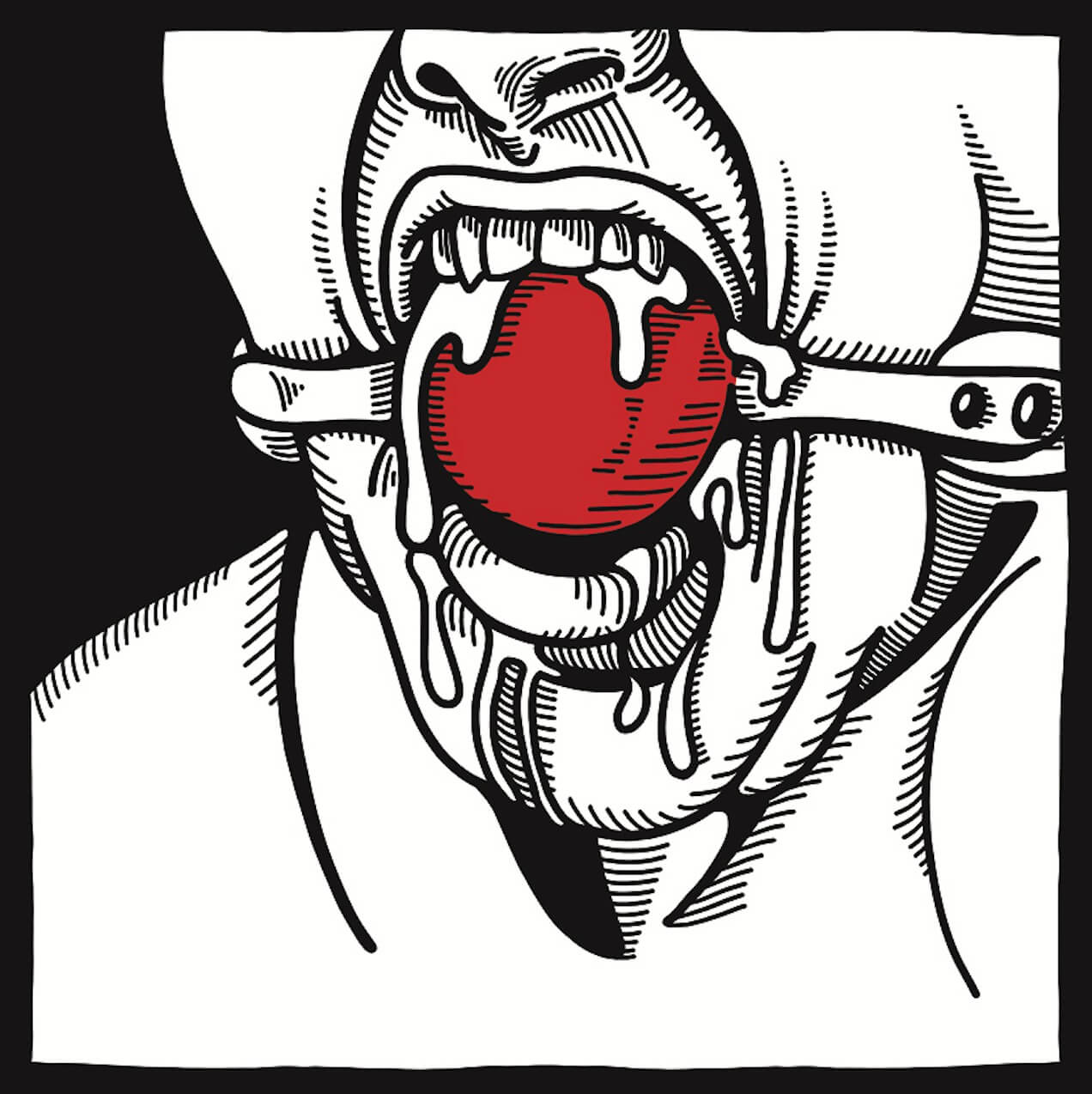
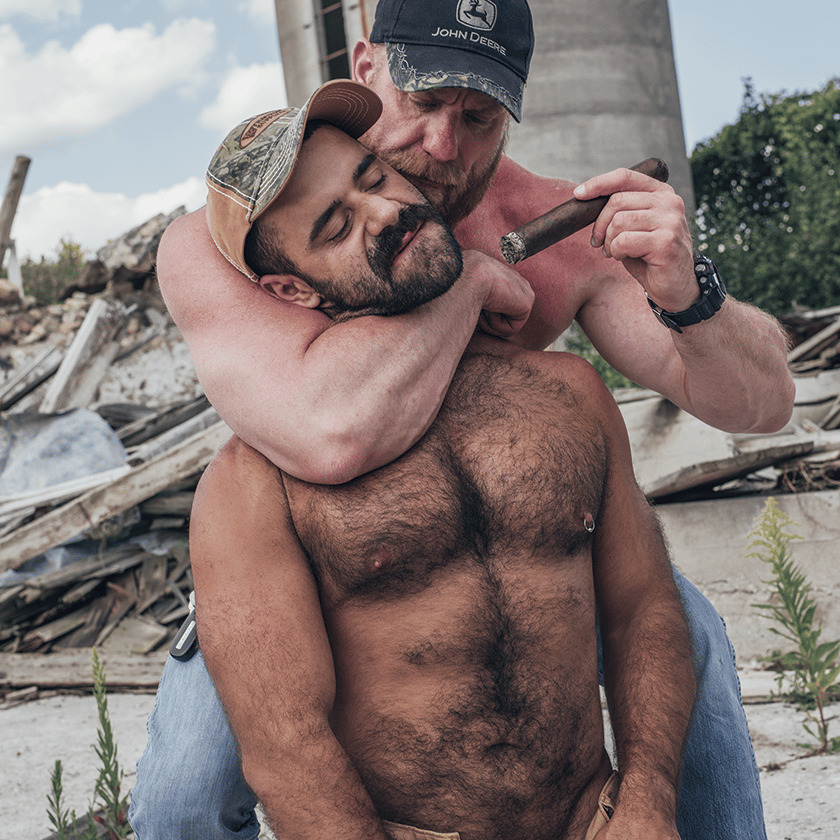


Is it bringing us together, or tearing us apart?
Story by: Nigel Whitfield
October 18, 2020
The smoke-filled leather bar of yesteryear feels like a thing of myth or legend in most cities, especially during the pandemic. But all too often, when you talk to those lucky enough to have experienced some of the legendary bars of the 1970s and ’80s, there’s a common reason given for their decline. It’s the internet, isn’t it? But is it really the scene-destroying monster that some imagine it to be, with COVID-19 putting the final nail in the coffin? Or has the internet actually brought us closer together as a community, even more so because of the pandemic?
#History
Leather folk have been on the internet since the ’80s and ’90s. At that time, many people used Usenet, a sort of global bulletin-board system where users could post messages on particular topics. Usenet had a gay discussion group called “net.motss” (Member Of The Same Sex) dating as far back as ’83. Its first BDSM discussion area, “alt.sex.bondage,” began in ’91.
Alongside the internet, dial-up information services like CompuServe had gay areas, with a smattering of kinky people in the human sexuality “HSX200” forum. This was a discussion area intended to provide a non-judgemental place for people to talk about “adult” issues, including BDSM and HIV/AIDS.
With fewer online spaces, you’d find leathermen, radical faeries, trans folks, bears, and twinks, all in one place. For this reason, conversations ranged broadly from sex tips to flirting, and from politics to emotional support. While there may have occasionally been some friction, there was also a great sense of community, like the way a small town may have one bar to serve the whole LGBTQ population. But unlike an actual bar, it was a space that many wouldn’t have otherwise had, because there wasn’t one close by, or they were too afraid to go to the bar.
In the ’90s, websites like Gay.com, Gaydar, and WorldLeatherMen were starting to provide more resources for queer people and more specialized spaces, such as chat rooms for specific fetishes. And yes, it made hook-ups a lot easier for the few of us who were actually online at that time. Of course, it’s easy to forget that for most of the ’90s, those who went online were still the minority.
Advances in mobile phones introduced the culture of apps and social media we use today. Grindr and Tinder arrived at the end of the ’00s, and at around the same time, sites like Twitter and Facebook experienced tremendous growth. This expansion allowed our community to connect with like-minded people more easily.
#GettingSchooled
Another benefit? It’s probably easier now for people to find out about kink subcultures, whether through looking at photos on sites like Tumblr and Bdsmlr.com, or connecting with other people on Recon or FetLife. Although the credibility of some of the info online is questionable, the permissive culture of the internet has helped lots of people discover what really turns them on.
There are also ample opportunities for education, from munches (casual social meetings for kink folks) to sites such as hardcell.org.uk, which provides clear, non-judgemental information about many sexual practices, behaviors, and party drugs.
#Promo
The ease of publishing on the internet has been a boon to many queer organizations. It’s simpler now than it ever has been to share event information online. Of course, the “community standards” of social networks like Facebook or YouTube can actively hamper the sharing of some LGBTQ content, but for a club or organization, the internet makes it easier and cheaper to promote events and fundraise, which again, brings us closer together.
#KinkDuringCorona
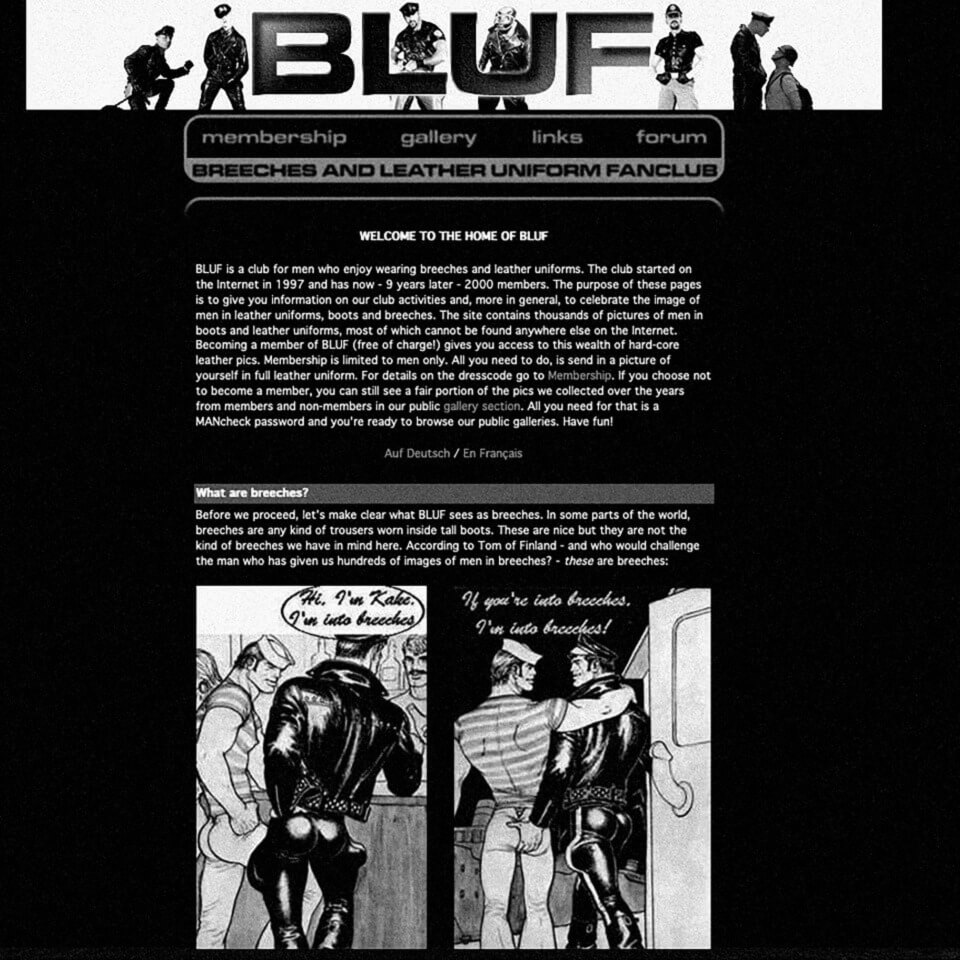
The internet’s power has become more apparent during the current pandemic. Most of 2020’s big leather and kink events were cancelled or postponed because of COVID-19. But the internet has proven to be a valuable tool in keeping the community together, and in helping to support venues that can’t open, through initiatives such as the SF Queer Nightlife fund and BLUF’s Virtual Bar, which aim to raise money to support venues or their staff.
Around the world, people have been organizing online events. For example, twice weekly Isolation Chats in the U.K. bring leathermen together for casual conversations, Berlin Cigarmen hosted an online get-together over Easter, there have been talks and classes from groups such as the Leather Archives and Museum, and big events such as Folsom Europe and Up Your Alley went virtual.
“Although the credibility of some of the info online is questionable, the permissive culture of the internet has helped lots of people discover what really turns them on.”
None of these are quite the same as attending an event in person, not least because online meetings tend to be much smaller. BLUF London’s online meetings are about 10 percent the size of an in-person event, and the Isolation Chats have a typical attendance of between 15 and 30 people. But for many, it’s a vital link to the community during lockdown, and it’s often a good excuse to get into gear.
One breakout success has been Virtual CLAW (Cleveland Leather Annual Weekend). The collection of education sessions, online social events, and entertainment had an attendance of 400. According to organizer Bob Miller, over half of the 150 people who took part in subsequent events had never attended in person. Virtual CLAW has become so successful, it will now continue as a monthly event.
#SocialIsolation
It’s not all good, though. We’ve probably all seen friends who seem to spend more time checking Recon or Scruff than talking to us, even when we’re sitting right across the table. It’s rude, but taken to extremes, it can also become a harmful addiction. When apps like these begin to replace sincere relationships, it can lead to social isolation and loneliness. This, in turn, can cause lethargy and depression, and make the user even lonelier. One study presented at the European Academy of Neurology (EAN) Virtual Congress this year also found that folks who are socially isolated are 40 percent more likely to have a stroke or heart attack.
We’ve also all seen the thirst trap photos that some people post, hoping for likes and comments. There’s a darker side to this. The pleasure chemicals released by the brain get some people hooked. And whether it’s the quest to increase followers, accumulate likes on a photo, or have the last witty word in an online discussion, some people don’t know when to stop.
#HarderBetterFaster?
There’s other pain too. In the “good old days” of newsgroups and simple discussion forums, conversations were much slower. Readers of soc.motss might have been responding to messages that were written days before. However, the speed with which something can blow up online today, and the number of people who can be involved is, frankly, terrifying.
The instant, constant flow of the net can be really bad for your stress levels; a study by the American Psychological Association found 20 percent of people “constantly” check their social media feeds. When things are particularly grim—for example, during the pandemic—that can cause increased anxiety.
#WhatAboutThoseApps?
Are hook-up apps killing our social spaces? We keep hearing that guys don’t need to go to gay bars to meet anymore. According to a paper co-written by Stanford sociologist Michael Rosenfeld, 70 percent of gay relationships begin online. But don’t blame it all on Recon or Scruff. When it comes to the diminishing real-life scene, there are other factors at play, such as gentrification and high rents, especially in cities like San Francisco, New York, and London. There are also things like smoking bans and cheap supermarket liquor, which have all had their part to play in the decline of bar culture. Why pay £5 for a pint in a bar where you can’t even smoke, when the shop on the corner will sell you six cans for £1 each? Remember, too, that HIV/AIDS cut a swathe through the patrons of old-time leather bars. For the generation that followed, more liberal attitudes—and yes, new technology—can make those spaces seem less important.
#TimeToCutTheCord?
The internet can bring us together and spread our messages, whether we’re urgently campaigning, compassionately supporting, or even just horned-up and prowling. Yes, it can tear us apart too, but during the pandemic, I believe that it has provided a vital lifeline to other kinksters at a time when social distancing is keeping us apart.
The net is a tool, just another item hanging on the playroom wall. Like a whip, when handled badly, it can cause damage and destruction. It’s all too easy to turn to your screen each time a notification beeps, so learn how to get the best from it—including when to ignore it—and it can unleash things you never dreamed of.