







Get schooled with these legendary books
Story by: Patrick Califia
October 18, 2020
There was a time when finding knowledgeable information about leathersex or radical sexual practices was not easy. One had to scour the library, or the shelves of the local gay bookstores. We shared gossip about new book titles or authors, and loaned each other paperbacks and magazines because they were precious gems of understanding—proof we existed. Today, we have access to thousands and thousands of free pages of fiction and non-fiction online, however, the internet is loaded with wildly inaccurate information about our community’s history, best practices, and relationship styles.
Here are a dozen leather and kink classics you can rely on by legendary writers who inspired and educated generations of fetishists during the golden age of our scene. These are the books that any kinkster, old or new, needs on their bookshelves or saved on their tablets. Their voices found their way into print despite censorship and societal hatred of homosexuality and leathersex. These authors risked a great deal of condemnation by putting their work into public view, so don’t let them be forgotten. Read them, re-read them, and pass their wisdom and candor on.
The Real Thing, by William Carney (Masquerade Books, 1968). First published by a mainstream press before Stonewall, Carney’s sinister literary gem of a novel is framed as correspondence between an Old Guard leatherman and his nephew, who has asked for instruction in the arcane ways of sadomasochism. Carney’s older narrator is arrogant and cruel, fanatically devoted to the craft of dominating other men. His intelligence and self-confidence blind him to the neophyte’s real agenda. Get ready for a sucker-punch of an ending.
Below the Belt and Other Stories, by Phil Andros (Alyson Publications, 1982). “Phil Andros” was the pseudonym of Samuel M. Steward, PhD. A protégé of Gertrude Stein’s, he abandoned the literary pretensions of academia to tattoo sailors during the 1950s and ’60s. He then wrote a series of gritty books about the sexual adventures of a leather-clad hustler. These stories work as one-handed reading, but they are also a valuable record of the early days of gay cruising and street life. Andros is bawdy, humorous, and eloquent about how homophobia limited, but could not eliminate, same-sex desire.
The Story of Harold: A Novel, by Terry Andrews, illustrations by Edward Gorey (Holt, Rinehart and Winston, 1974). A finely-crafted, first-person account of a leatherman’s life in pre-Stonewall New York City. The narrator’s reality is split between his work as a children’s author and his sexual adventures with Bowery winos, a married man, and a few women too. Though bleak at times, the novel leads the reader toward salvation in an era when gay sex (especially the kinky kind) was taboo. Who the hell was this guy?
I Want it All, by Dirk Vanden (Frenchy’s Gay Line, 1969). Although published by a throwaway press and sold in adult bookstores, Vanden’s novel is well-written and hot, chronicling gay bars, cruising, drugs, rock ’n’ roll, and the hope for social change of the late 1960s and early ’70s. Vanden’s stories get you hard without insulting your intelligence, and take you back to a time when leather bars were relatively new institutions. Vanden knew from personal experience that gay sex was a good thing, and being happy was within the reach of any leatherman. After you’ve read it, see if you can find the rest of the trilogy, All or Nothing and All Is Well. Be prepared for graphic accounts of antigay violence.
The Leatherman’s Handbook: The Complete First Edition Text, by Larry Townsend, introduction by John Preston (LT Publications, 1972). When it hit bookstands in 1972, this non-fiction exposé of a gay subculture centered on bondage and discipline was quite shocking. A consummate storyteller, Townsend takes the reader on a wild motorcycle ride through a series of erotic adventures. Although it includes an extreme scene that features near-castration, most guys skipped over it to soak up the clues about how to signal your interest in obtaining a Master, and how to behave if you got lucky enough to meet one. You would practically be issued a copy along with your first leather jacket or bar vest, back in the day.
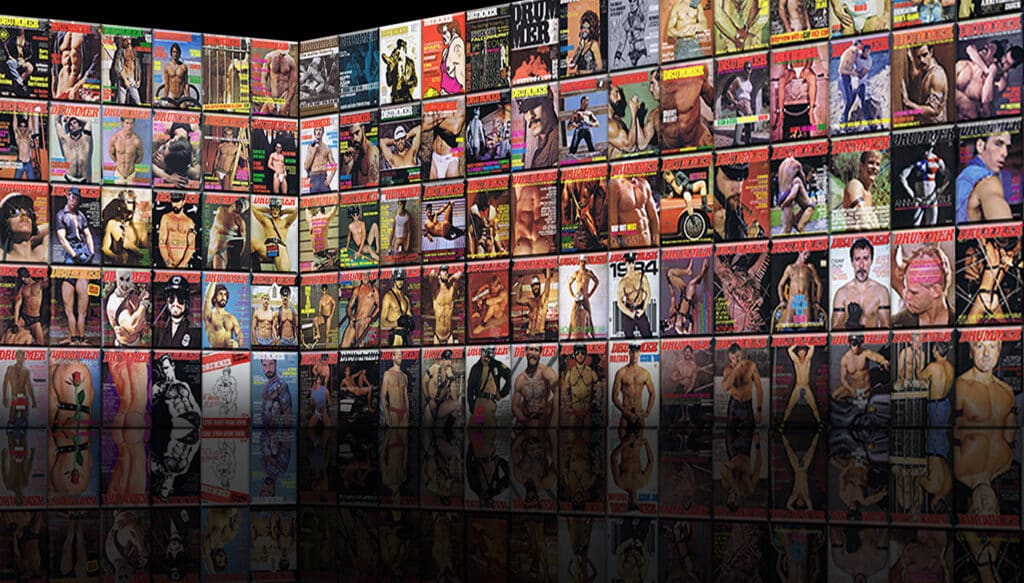
Mister Benson, by John Preston (Cleis Press, 1983). Originally serialized in Drummer, leathermen and clones used to line up around the block at Castro Street’s gay bookstore, A Different Light, to get each new instalment. Jamie is a young ingénue who snags the attention and training of a severe older master, Mr. Benson. The points of view of both “boy” and Master are included. The book is kinky, romantic, sarcastic, and intelligent. Preston had a string of publications that broke through antigay censorship. He also served as one of the early editors of The Advocate and pioneered safer-sex erotica when HIV first emerged.
Urban Aboriginals: A Celebration of Leathersexuality, by Geoff Mains (Daedalus Publishing Company, 1982). In his legendary book, Mains looked at the leather community of his decade as an anthropologist doing an ethnography, but without the limitations of pretending to be an objective outsider. Instead, he shamelessly delights in explaining the brotherhood of men exploring the outer limits of their bodies and finding new ways to be in relationships with one another.
Leatherfolk: Radical Sex, People, Politics, and Practice, by Mark Thompson (Daedalus Publishing Company, 1991). Thompson served for decades as the arts and culture editor of The Advocate, and was also involved with men’s groups that explored sex and spirituality. This pansexual collection of essays and other material going back to the ’40s includes the voices of influential writers and thinkers, including Joseph W. Bean, Gayle Rubin, Robert Chesley, Dorothy Allison, Guy Baldwin, Wickie Stamps, and Rev. Troy D. Perry.
Captain in Charge of Taking Care of Captain O’Malley and Other Canonical Stories, by Jack Fritscher (Palm Drive Publishing, 1984). Fritscher is a prolific author and editor who brought the original version of Drummer to new heights of literary excellence and erotic blasphemy as its editor for just under two years in the late ’70s. These 22 stories feature an astonishing array of bent archetypes of gay sex: uniforms, blue-collar guys, more uniforms, bikers, and even more uniforms, all depicted with an original flair that transports the reader into Fritscher’s lived experience and wild imagination.
Leathersex: A Guide for the Curious Outsider and the Serious Player, by Joseph Bean (Daedalus Publishing Company, 1994). I’m not sure the “curious outsider” could read this book without having all of their hair turn white. Another Drummer editorial alumni, Bean was a leatherman who never forgot his Old Guard roots. He does not apologize for pushing this “how-to” book to the very edge of what can be taught in mere words (see the chapter on “Playing with Life and Death,” for example). A deeply spiritual man, Bean never stopped looking for new ways to forge strong ties with other men. This is a compendium of traditions, etiquette, and transcendence we can now take for granted, thanks to pioneers like him.
Ties That Bind: S/M/Leather/Fetish Erotic Style: Issues, Commentaries and Advice, by Guy Baldwin, preface by Gayle Rubin (Daedalus Publishing Company, 1993). Baldwin was one of the first kink-aware therapists, and a long-time member of the Avatar club. He’s also a former International Mr. Leather title-holder. This compilation of his essays about dilemmas in power-exchange relationships still rings true. You can’t do better than this carefully-considered account of what S/M is, why it works, and how its traditions have evolved in a world that is not kind to sexual minorities.Learning the Ropes: A Basic Guide to Safe and Fun BDSM Lovemaking, by Race Bannon (Daedalus Publishing Company, 1991). Bannon’s experience as a leatherman shines through in this novice-oriented manual that gives the reader a solid grounding in safety, consent, and exploration of the erotic imagination. Bannon deserves more credit as a community founder, intellectual, and activist. I’m glad his voice is preserved here for younger generations to study.