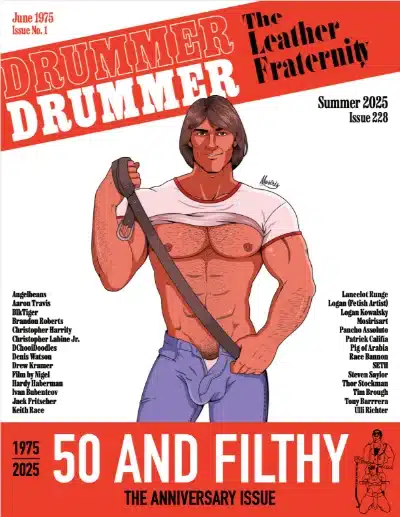
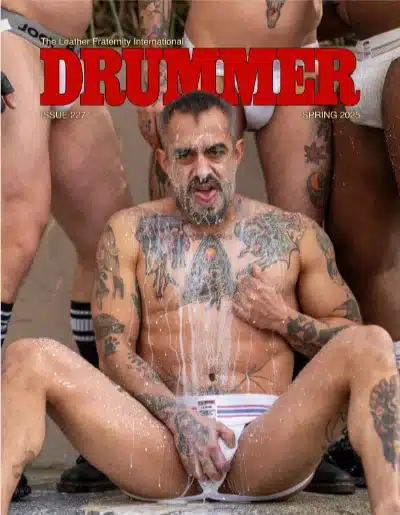
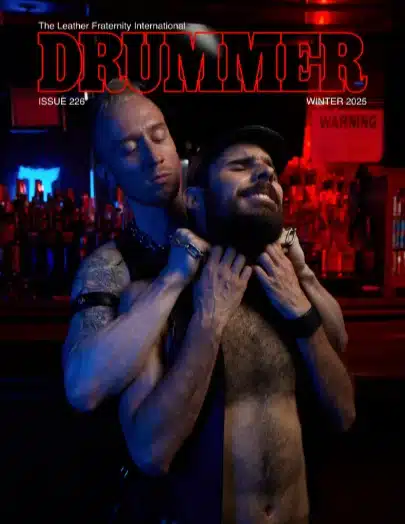
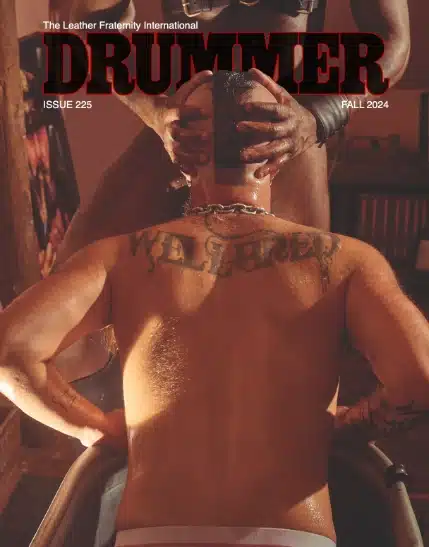
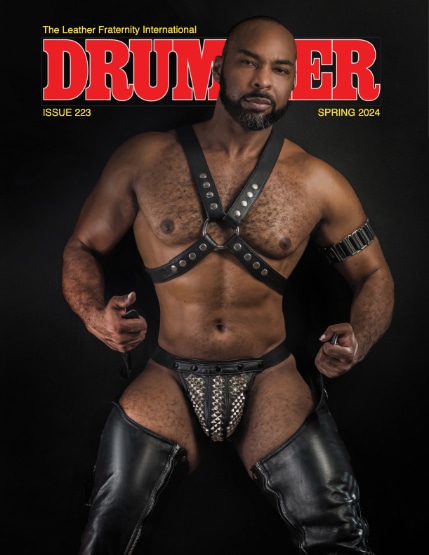
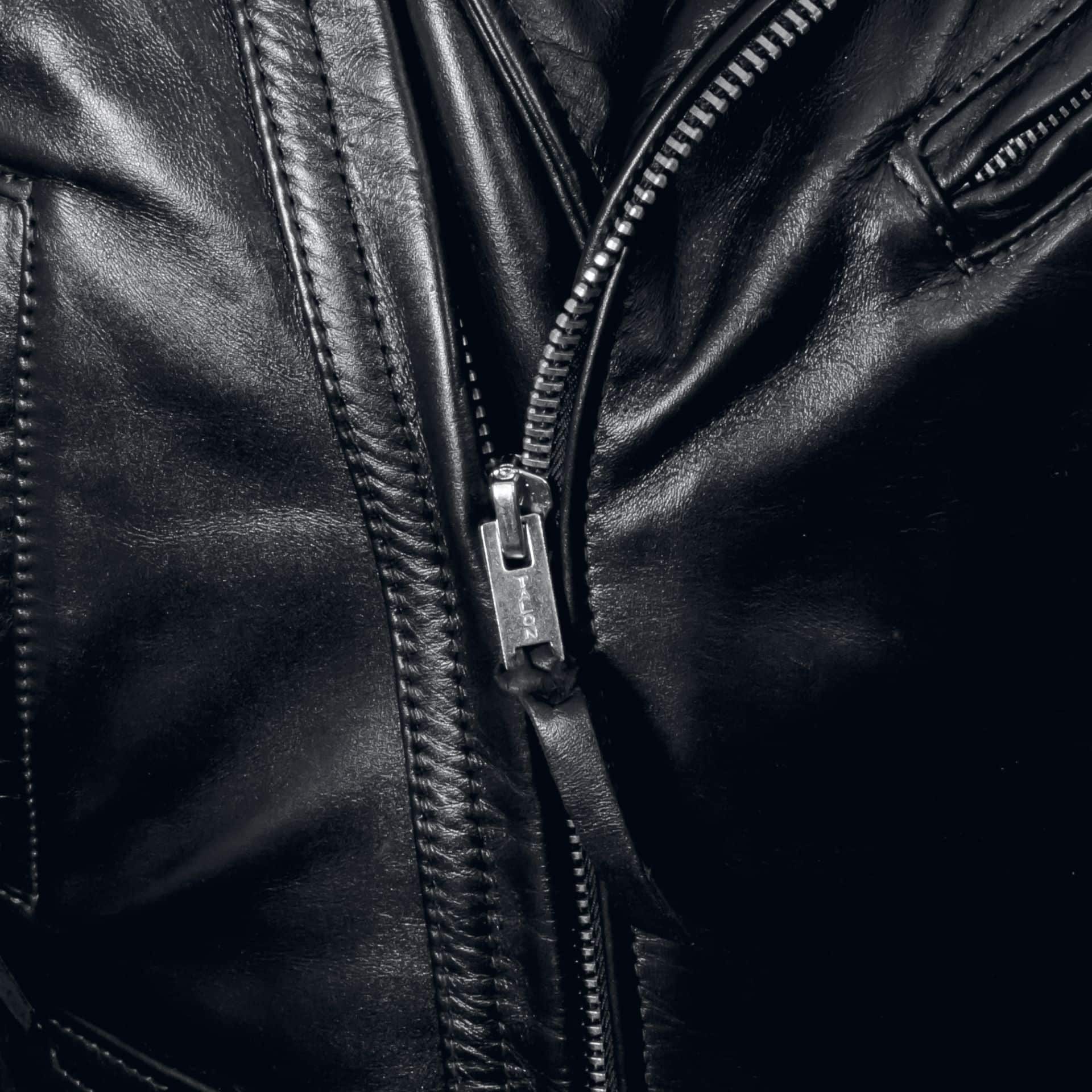

The Future is the Past and the Past is Forever. Remembering the Dawn of Drummer June 20, 1975, may this 1970s editor-in-chief at 86, the last survivor of our mid-century startup, share an eyewitness memoir about the birth of a juggernaut so epic its impact was bigger than any one of us. No one person created Drummer. It took a village. At Stonewall in 1969, gay character changed. At Drummer in 1975, leather character changed.
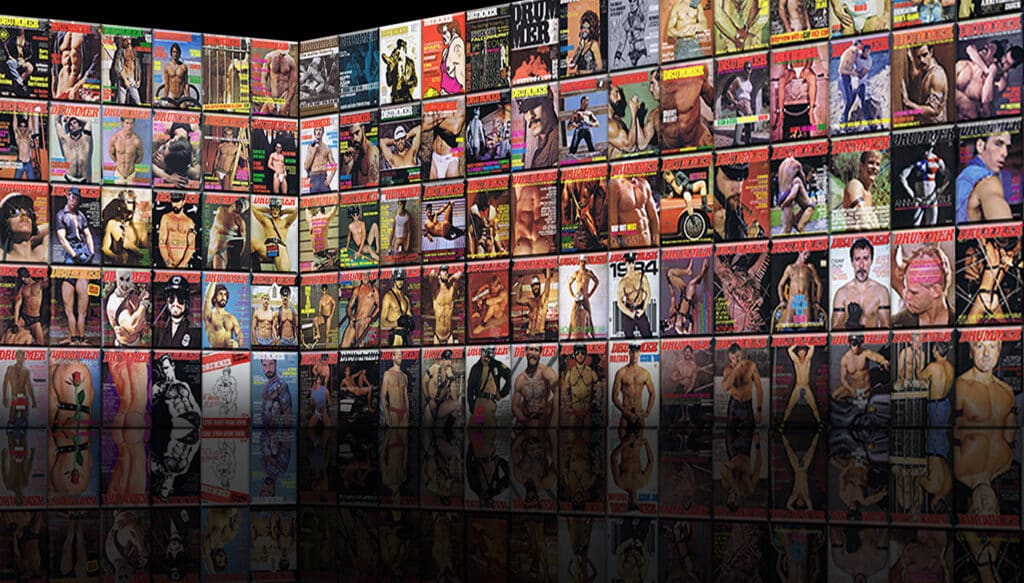
Drummer helped create the leather culture it reported on. Drummer was an autobiography of us all, created by many of us to entertain the rest of us. Its 20,000 pages of erotic advocacy and journalism portrayed our desires to organize our thoughts to inform our practices. Never old guard or new guard, Drummer was always avant-garde. Drummer was a first draft of leather history. Drummer drove history.
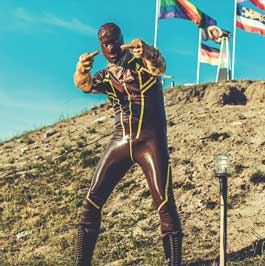
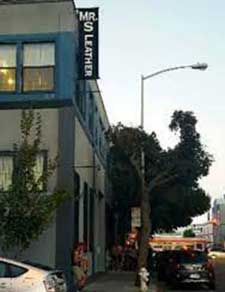
On June 12, 2018, Steve Gaynes, San Francisco Leather Daddy XII, reminded the Victory Party for the Creation of the SOMA Leather District that the heritage site would not exist had Drummer not spent years influencing and documenting leather culture South of Market. Our “Mr. Drummer” contests anchored and sustained Folsom Fair weekends. Our 1980s publisher Tony DeBlase created the Leather Pride Flag that flies over the District. With around 40,000 copies almost monthly for twenty-four years, by the time Drummer was killed by AIDS and the Internet in 1999, millions more had read Drummer than have read any gay book.
Drummer had only two 1970s editors. Founding publisher John Embry (born 1926) hired Jeanne Barney (born 1938) and me (born 1939), he said, as founding LA editor-in-chief and founding San Francisco editor-in-chief, respectively. He flattered us because he frequently failed to pay us. He of the “Mr. Drummer” titles, said titles were better than money. Even so, what joy to invite an emerging first-generation of leather writers, artists, and photographers to come out in Drummer so soon after Stonewall.
In 1972 Los Angeles, traveling salesman Embry pinched the title “Drummer” from Clark Polak’s 1960s Drum magazine including its “Different Drummer” quote by Thoreau. Because Embry’s trial zine was a mail-order catalog on folded typing paper, he needed editorial content and a mailing list. So he did a hostile takeover of Larry Townsend’s thriving HELP Newsletter. Titling the merger HELP/Drummer, he coveted Townsend’s subscribers as consumers of his cock rings and poppers.
Townsend did not found Drummer. Even before Larry climbed on board, every Drummer issue was a virtual new chapter continuing his foundational Leatherman’s Handbook. Few know that French philosopher Michel Foucault, a Drummer reader riding fists on Folsom, so respected Larry’s Handbook he began translating it but died before completion.
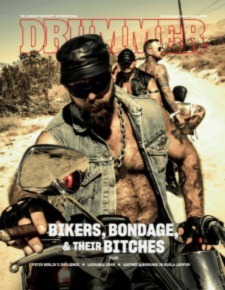
Drummer was a magazine of sex, race, and gender. Our first “Mr. Drummer” Val Martin, our most frequent cover model, was an immigrant from South America alongside associate-editor Mario Simon, the Spanish immigrant husband of publisher Embry. Staff photographer Efren Ramirez came from the Philippines. Mr. Drummer contestants “Walking the Leather Carpet” were examples of diversity on parade. In April 1994 Patrick Califia put the new Mr. Drummer Graylin Thornton on the cover of issue #174. It featured Graylin’s editorial written from an African-American POV, “The Slavery of Words,” including “master,” “slave,” “boy,” and “buck naked.” That issue also included travel writing by Cain Berlinger, author of Black Men in Leather. In Drummer #177, Califia put Ken Chang on the cover celebrating “Men of the Mystical East” featuring Japanese artist Gengorah Tagame and his S&M manga. In Drummer #93, Mark Chester showcased disabled Black men photographed by Mapplethorpe’s mentor George Dureau.
In LA Drummer, Embry published provocative articles on race, rape, incest, gay marriage, murder, necrophilia, and underage sex which gave his nemesis and censor LAPD Police Chief “Crazy” Ed Davis wrong ideas about leatherfolk. When Embry hosted his Drummer Slave Auction, April 11, 1976, Davis suspecting the worst of S&M faggots, arrested the entire Drummer staff and 42 leathermen. When a cop asked Jeanne if she was a drag queen, she said, “Honey, if I was a drag queen, I’d have bigger tits.” Davis rode Drummer out of town on rail. The then ten-month-old baby fled disaster in LA to identity in San Francisco, where Embry hired two leather locals: my longtime playmate, art director Al (A Jay) Shapiro and me (1977-1980). Al had ten years of magazine experience, I had twenty, and Embry three.
While Embry went AWOL for a year for court dates in LA and for colon cancer surgery, Al and I by his return in 1979 had created half the Drummer issues in existence. Embry’s absence allowed us to dump his campy 1950s cocktail-hour humor and transform Drummer’s character from an LA bar rag advertising “toupees” and the “Bla Bla Café,” into a sexy San Francisco leather monthly investigating and influencing gay-male gender identity. Subscribers bellied up to the bar, boys. Embry confessed to the last Drummer editor Robert Davolt in 2003: “I never foresaw the impact Drummer would have. It was a big surprise to me. I’m amazed.”
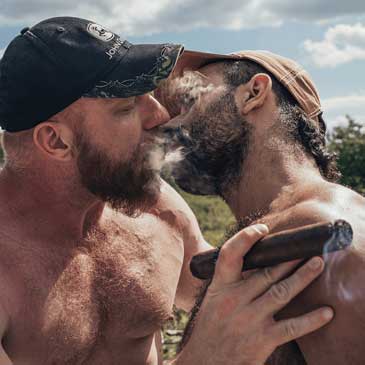
In the Golden Age of Gay Magazines 1975-1999, Drummer became the signature magazine of grown-up homomasculine men by inventing Beef, Bulls, Bears, and Daddies as fetish identities. To call this by its name, I coined the word homomasculinity and hired my lover Robert Mapplethorpe to illustrate it with his cigar cover, “Authentic Biker,” (Drummer #24, 1978). Making Drummer reader-reflexive, Al and I deleted porn models and gave readers what they wanted: authentic images of themselves.
To fuel the renewable energy of Eros that kept Drummer fresh, my new column “Tough Customers,” (Drummer #25, December 1978), recruited leathermen to submit bold selfies un-closeting new faces and fetishes. Twenty years before camera phones, Drummer changed how leathermen represented themselves. The Tom of Finland Newsletter confirmed that “Drummer, groundbreaking for its time, set precedence for all homomasculine representation to come.”
Having been encouraged by Tony Deblase in 1995 to create my DrummerArchives.com to complement his founding of the Leather Archives & Museum, I wrote two books to keep Drummer history alive and accessible after its closure. So when Sir Jack MacCallum bought the rights to Drummer in 2019, he made my black-leather heart beat like a drum when we sat at my kitchen table that August 13 discussing his plans to create Drummer 2.0 picking up where we left off in 1999.
Jack Fritscher is the author of 30 books which can be read for free at DrummerArchives.com including Gay Pioneers: How Drummer Magazine Shaped Gay Culture 1965-1999.
Drummer helped create the leather culture it reported on. Drummer was an autobiography of us all, created by many of us to entertain the rest of us. Its 20,000 pages of erotic advocacy and journalism portrayed our desires to organize our thoughts to inform our practices. Never old guard or new guard, Drummer was always avant-garde. Drummer was a first draft of leather history. Drummer drove history.
On June 12, 2018, Steve Gaynes, San Francisco Leather Daddy XII, reminded the Victory Party for the Creation of the SOMA Leather District that the heritage site would not exist had Drummer not spent years influencing and documenting leather culture South of Market. Our “Mr. Drummer” contests anchored and sustained Folsom Fair weekends. Our 1980s publisher Tony DeBlase created the Leather Pride Flag that flies over the District. With around 40,000 copies almost monthly for twenty-four years, by the time Drummer was killed by AIDS and the Internet in 1999, millions more had read Drummer than have read any gay book.
Drummer had only two 1970s editors. Founding publisher John Embry (born 1926) hired Jeanne Barney (born 1938) and me (born 1939), he said, as founding LA editor-in-chief and founding San Francisco editor-in-chief, respectively. He flattered us because he frequently failed to pay us. He of the “Mr. Drummer” titles, said titles were better than money. Even so, what joy to invite an emerging first-generation of leather writers, artists, and photographers to come out in Drummer so soon after Stonewall.
In 1972 Los Angeles, traveling salesman Embry pinched the title “Drummer” from Clark Polak’s 1960s Drum magazine including its “Different Drummer” quote by Thoreau. Because Embry’s trial zine was a mail-order catalog on folded typing paper, he needed editorial content and a mailing list. So he did a hostile takeover of Larry Townsend’s thriving HELP Newsletter. Titling the merger HELP/Drummer, he coveted Townsend’s subscribers as consumers of his cock rings and poppers.
Townsend did not found Drummer. Even before Larry climbed on board, every Drummer issue was a virtual new chapter continuing his foundational Leatherman’s Handbook. Few know that French philosopher Michel Foucault, a Drummer reader riding fists on Folsom, so respected Larry’s Handbook he began translating it but died before completion.
Drummer was a magazine of sex, race, and gender. Our first “Mr. Drummer” Val Martin, our most frequent cover model, was an immigrant from South America alongside associate-editor Mario Simon, the Spanish immigrant husband of publisher Embry. Staff photographer Efren Ramirez came from the Philippines. Mr. Drummer contestants “Walking the Leather Carpet” were examples of diversity on parade. In April 1994 Patrick Califia put the new Mr. Drummer Graylin Thornton on the cover of issue #174. It featured Graylin’s editorial written from an African-American POV, “The Slavery of Words,” including “master,” “slave,” “boy,” and “buck naked.” That issue also included travel writing by Cain Berlinger, author of Black Men in Leather. In Drummer #177, Califia put Ken Chang on the cover celebrating “Men of the Mystical East” featuring Japanese artist Gengorah Tagame and his S&M manga. In Drummer #93, Mark Chester showcased disabled Black men photographed by Mapplethorpe’s mentor George Dureau.
In LA Drummer, Embry published provocative articles on race, rape, incest, gay marriage, murder, necrophilia, and underage sex which gave his nemesis and censor LAPD Police Chief “Crazy” Ed Davis wrong ideas about leatherfolk. When Embry hosted his Drummer Slave Auction, April 11, 1976, Davis suspecting the worst of S&M faggots, arrested the entire Drummer staff and 42 leathermen. When a cop asked Jeanne if she was a drag queen, she said, “Honey, if I was a drag queen, I’d have bigger tits.” Davis rode Drummer out of town on rail. The then ten-month-old baby fled disaster in LA to identity in San Francisco, where Embry hired two leather locals: my longtime playmate, art director Al (A Jay) Shapiro and me (1977-1980). Al had ten years of magazine experience, I had twenty, and Embry three.
While Embry went AWOL for a year for court dates in LA and for colon cancer surgery, Al and I by his return in 1979 had created half the Drummer issues in existence. Embry’s absence allowed us to dump his campy 1950s cocktail-hour humor and transform Drummer’s character from an LA bar rag advertising “toupees” and the “Bla Bla Café,” into a sexy San Francisco leather monthly investigating and influencing gay-male gender identity. Subscribers bellied up to the bar, boys. Embry confessed to the last Drummer editor Robert Davolt in 2003: “I never foresaw the impact Drummer would have. It was a big surprise to me. I’m amazed.”
In the Golden Age of Gay Magazines 1975-1999, Drummer became the signature magazine of grown-up homomasculine men by inventing Beef, Bulls, Bears, and Daddies as fetish identities. To call this by its name, I coined the word homomasculinity and hired my lover Robert Mapplethorpe to illustrate it with his cigar cover, “Authentic Biker,” (Drummer #24, 1978). Making Drummer reader-reflexive, Al and I deleted porn models and gave readers what they wanted: authentic images of themselves.
To fuel the renewable energy of Eros that kept Drummer fresh, my new column “Tough Customers,” (Drummer #25, December 1978), recruited leathermen to submit bold selfies un-closeting new faces and fetishes. Twenty years before camera phones, Drummer changed how leathermen represented themselves. The Tom of Finland Newsletter confirmed that “Drummer, groundbreaking for its time, set precedence for all homomasculine representation to come.”
Having been encouraged by Tony Deblase in 1995 to create my DrummerArchives.com to complement his founding of the Leather Archives & Museum, I wrote two books to keep Drummer history alive and accessible after its closure. So when Sir Jack MacCallum bought the rights to Drummer in 2019, he made my black-leather heart beat like a drum when we sat at my kitchen table that August 13 discussing his plans to create Drummer 2.0 picking up where we left off in 1999.
Jack Fritscher is the author of 30 books which can be read for free at DrummerArchives.com including Gay Pioneers: How Drummer Magazine Shaped Gay Culture 1965-1999.
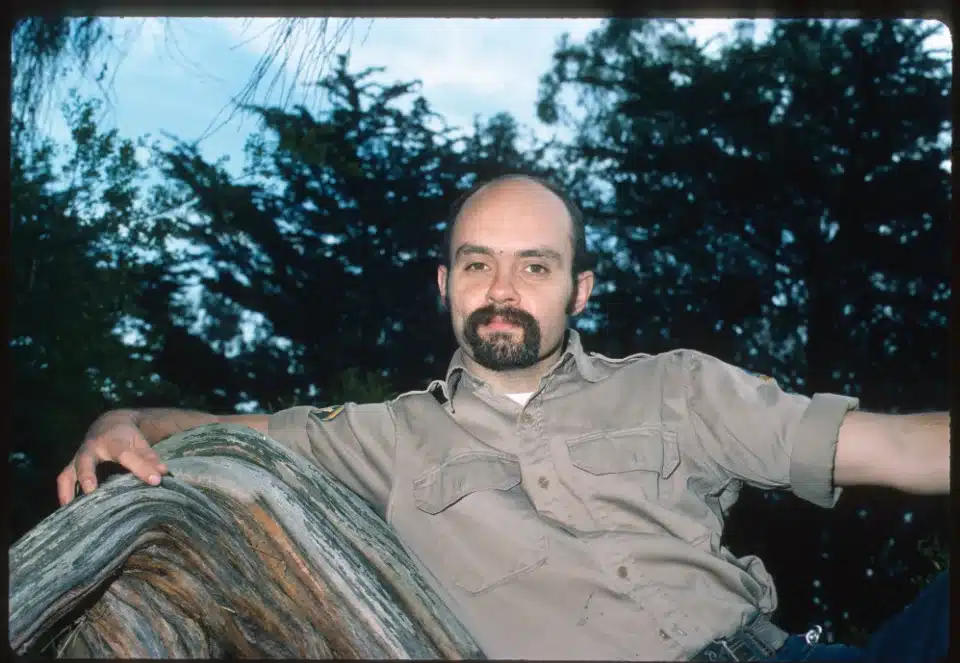
Author: Jack Fritscher, PhD
Photo Credit: David Sparrow