







Bonding over bound bodies
Story by: Mike Miksche
Photography by: Mike Miksche
October 2, 2019
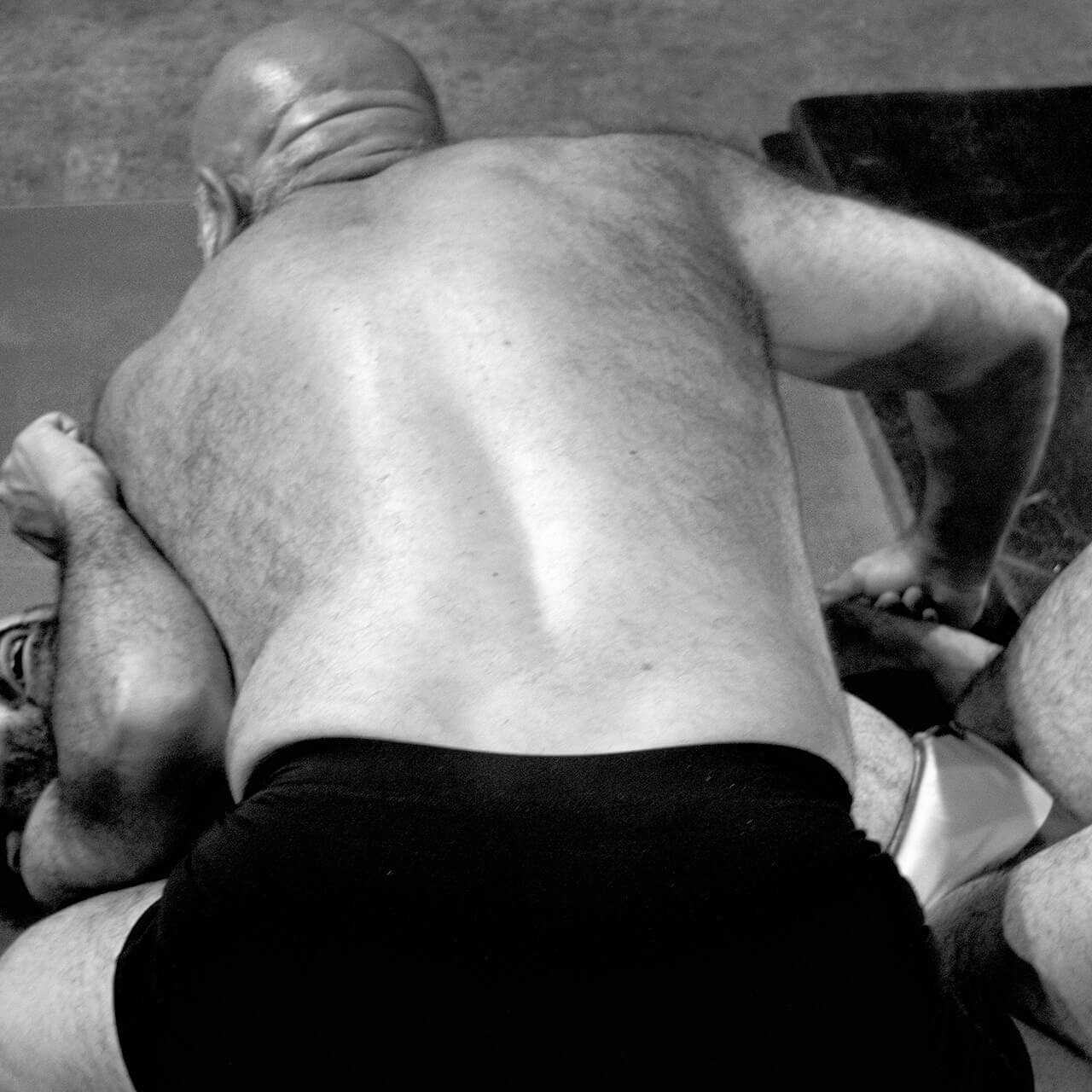
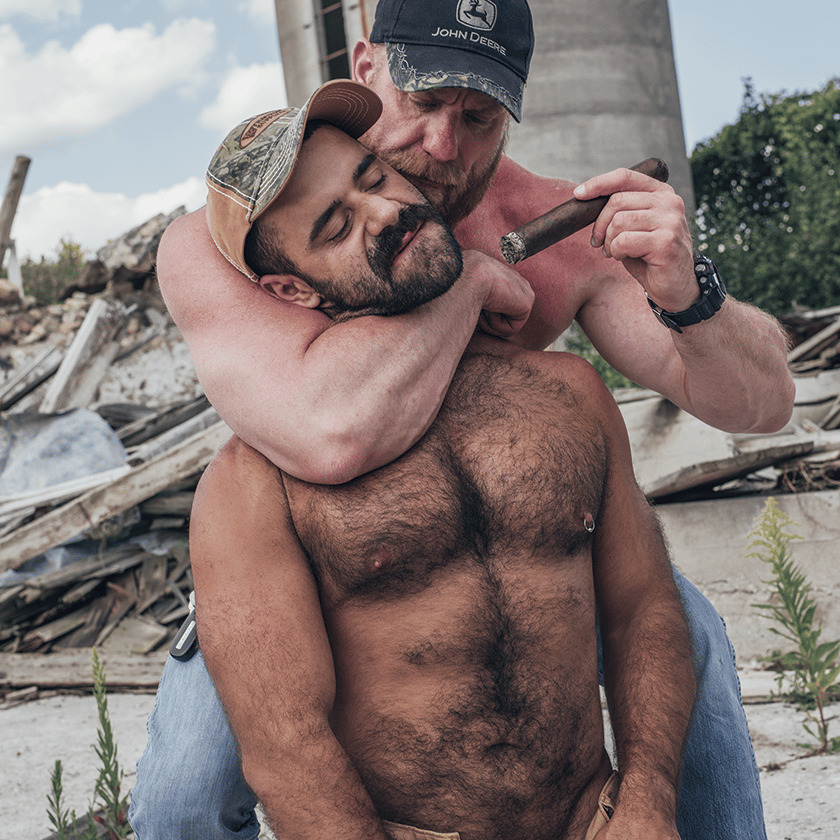
The guys at the S.F. Grapplers Wrestling Club give each other license to exert their force onto one another, while they practice all
forms of grappling like Brazilian Jiu-Jitsu (BJJ), submission grappling, and Western wrestling. Limbs get bent, and bodies are bound by each other’s hands, arms, and legs. In some cases, blokes are choked to submission but if things get too hairy, one can tap out, like a safe word, and the scene will stop just like that.
There seem to be no hard feelings after they “roll,” despite the brute force exerted at times. The guys act brotherly towards each other after, as though the battle has somehow brought them closer together. So what is it about a combat sport like grappling that strengthens these bonds?
Dave Ruechelle is one of the co-founders of S.F. Grapplers, which caters to bi, gay, and gay-friendly men in the Bay Area. He believes that “all men have some aggression that needs to be drained off somewhere.” Maybe this can begin to explain this fraternal phenomenon.
“It’s the chance to give each other permission to be aggressive; aggressive in the fight, and yet at the end of it or even during, learning from each other and cooperating,” he says. If Ruechelle gets one of his opponents to submit, he’ll offer to recreate the scene after it’s all over, while giving pointers.
“For me, that’s the brotherhood and fraternity aspect that I never had in my life,” he explains. “I never had that activity and that kind of camaraderie.”

“There are few places in life these days, where one on one, body against body, physical competition is endorsed and readily available,” David J. Ley writes in Psychology Today. Ley is a clinical psychologist who has a black belt in BJJ. “There are even fewer like BJJ, where best friends can compete aggressively in one moment, then step off the mat and celebrate each other’s accomplishments. BJJ has become an intense, tightly-knit, strongly supported community.”
One might wonder whether all this combat leads to sex, at least for the S.F. Grapplers. There are a great number of people who fetishize the sport on sites like MeetFighters.com. And the group does meet at San Francisco Catalyst, a social and educational space for the kink community in South of Market.
“I won’t deny there is a sexual component but it’s not a sexual activity,” Ruechelle says. “There’s a sexual component maybe in the same way as there is with bodybuilding if you appreciate a male body and you want to make the most of yours.”
At times, the men at S.F. Grapplers push themselves and each other to their absolute limits, struggling, sweating and punching their way through to the other side. Of course, what is sexual is completely subjective, but one thing is for certain: this is what male bonding looks like.