

What’s The Ideal Form A Relationship Between Two Men Can Take?
Bulldog has an answer to that question.
I.
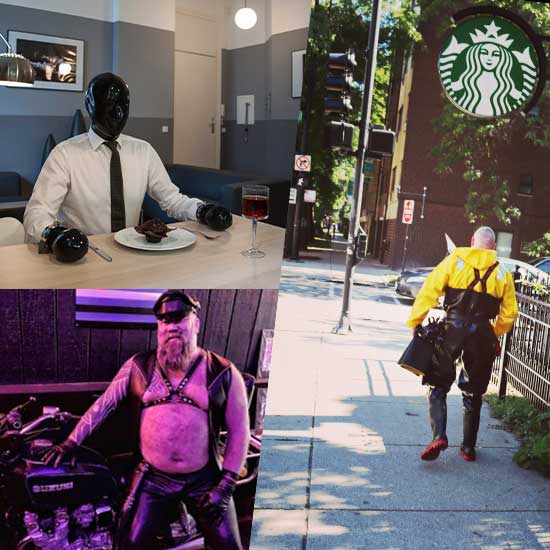
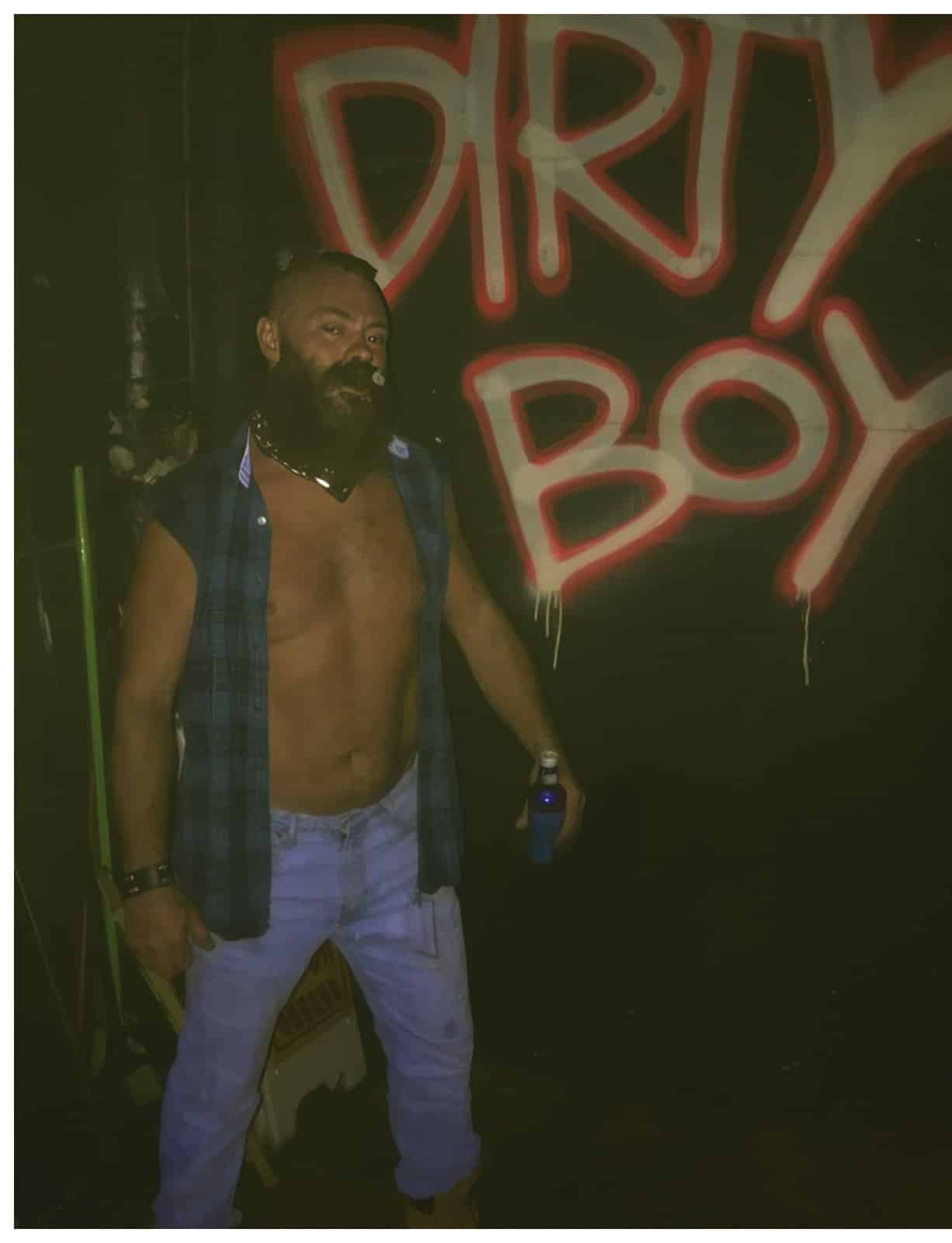
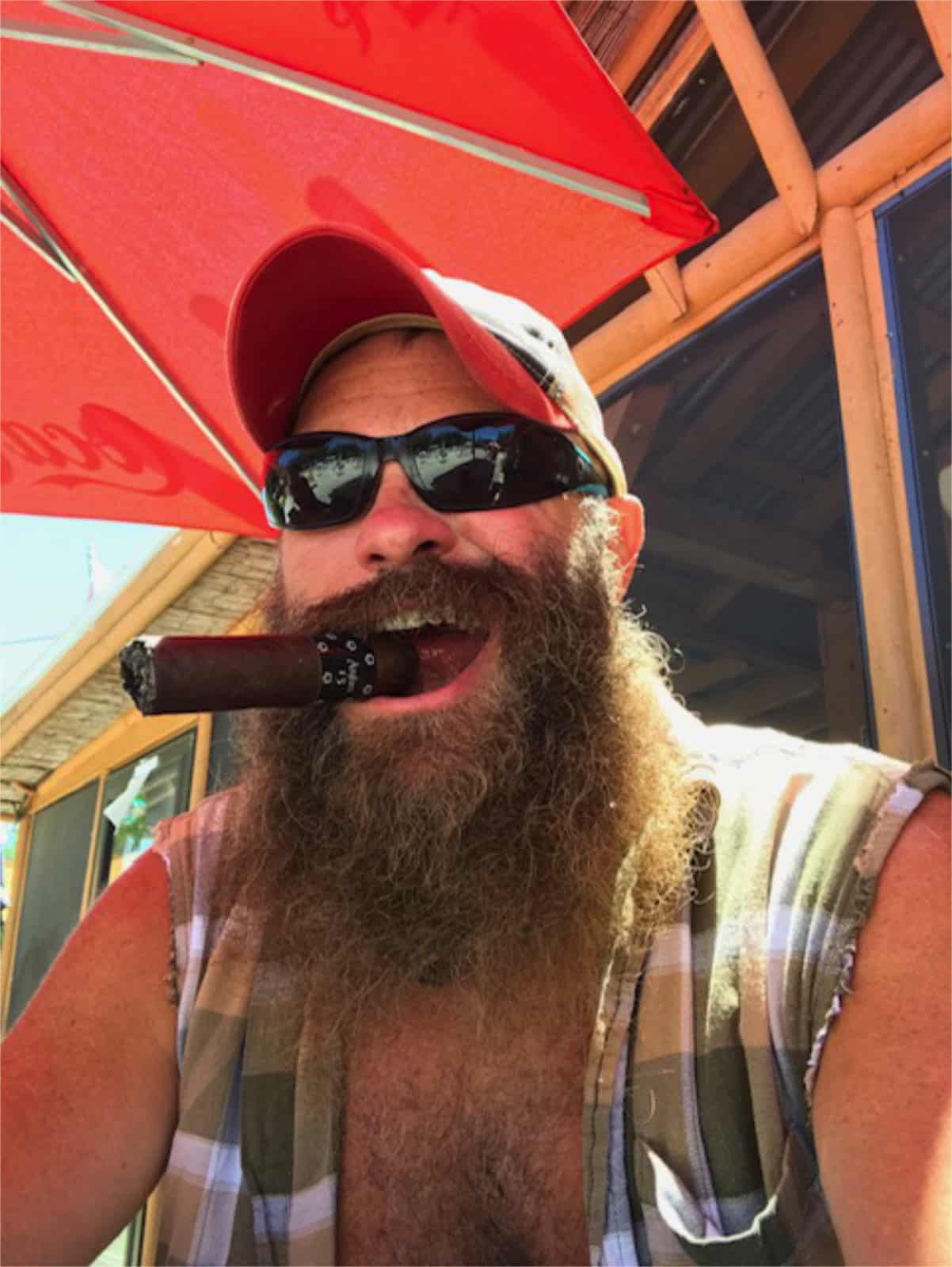
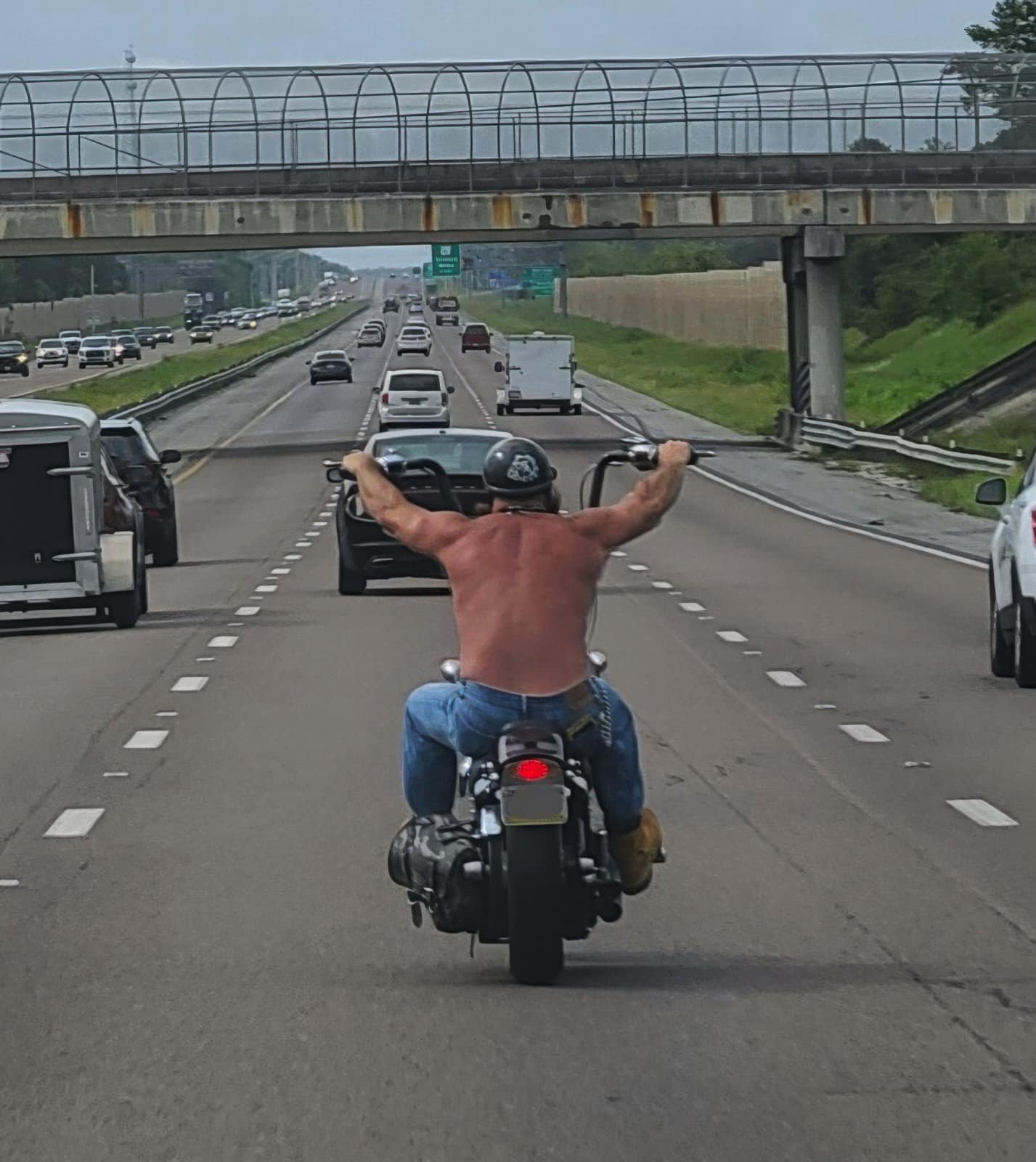
Everybody calls him “Bulldog.” People were calling him Bulldog before he called himself Bulldog. He is a big, hairy caveman who rides up shirtless on his Honda CBR900RR or in his yellow Jeep—he calls it “Pissah”—with the doors removed or in his Big Fucking Truck.
He clomps into the bar in his Timberlands—the Ramrod in Fort Lauderdale, the Providence Eagle, the Atlanta Eagle, wherever—and everything stops as half the men interrupt whatever they were doing to go greet him.
When he gives you a hug, you have been well and truly hugged. His muscular arms wrap around you—if he wanted to he could squeeze the life out of you, but no, there’s that hand at the back of your neck as he looks into your eyes and tells you he’s happy to see you. You feel calmer, happier, content.
That’s Bulldog.
His father was a drill instructor. His mother had never heard of that “glass ceiling” thing and rose to be a director within the Department of Defense when she was still in her twenties. There were no shades of gray in his upbringing; it was a black and white world or right and wrong, good guys and bad guys, early (always) or late (never).
Bulldog didn’t quite figure out he was gay until he was in his twenties and approached this newly discovered truth in the conventional way: you meet a guy, you like him, he likes you, you date and get to know each other, you join hands and walk down the path of life together, the years fly by and there you are, two old men, still holding hands, tottering down Commercial Street in Provincetown. So easy. So simple.
But Bulldog was sent by his job to Atlanta, Georgia, and in a bar there he shot pool with a guy. The guy was young, fit, handsome, standing tall with chest out and
shoulders back, and around his neck was a length of chain secured with a padlock.
Bulldog asked the man his name and he replied “Call me ‘boy.’” Odd name, but Bulldog hadn’t spent much time in the South and thought maybe it was a Down South thing.
They parted ways. Bulldog returned home, but he couldn’t stop thinking about that man with the chain padlocked around his neck who went by “boy.” Through the magic of the internet, Bulldog tracked him down. They talked. Bulldog asked about the chain, about the appellation. “I’m a submissive man. The collar I wear belongs to my Sir. I am his boy.” Bulldog scoured the internet…boy and Sir, Master and slave, Dominant and submissive.
Back then there were still these things called “gay and lesbian bookstores” where you could go and find shelf after shelf after shelf of books, and in most, a few shelves would be devoted to books concerning Leather. Bulldog brought a stack of them to the guy at the cash register, slid his money across the counter, and had already cracked open the first one and started to read as the clerk counted out his change.
The relationships described in these books—where one man leads and the other man follows, one man steers the canoe and the other man paddles—made perfect sense to Bulldog. He had grown up on a military base on an island and spent most of his life
there up until that point. Chain of command, rank, deference to your superiors, giving orders and following orders, protocol, duty, service…all of these were how the world he knew worked.
With Dad and boy as his template for how gay men are in a relationship with each another, he quickly had a string of men he addressed as “boy” and who wore his collar and called him “Sir.” It seemed natural for him to assume the Dominant role, he was good at it, and this status went unchallenged.
And then his mother got sick. His mother was dying.
With a family of seven boys, how does a Dad deal with having the thing he fears most in life playing out? His boys looked to him for support, for guidance, for comfort –– it did not seem right to reverse that. Not that he had any idea what he would ask any of his boys to provide. His Irish Catholic family had taught him many things but how men express their feelings was not one of them.
Bulldog describes the Providence Eagle as one of the best bars he has ever patronized. The first time he barged through the doors, he had a sense that he was among brothers. Although he did not know them and they did not know him, those other men in the bar knew who he was and what he was about better than any other people in the world. He became a frequent visitor and got to know many of them and found this initial impression had been correct.
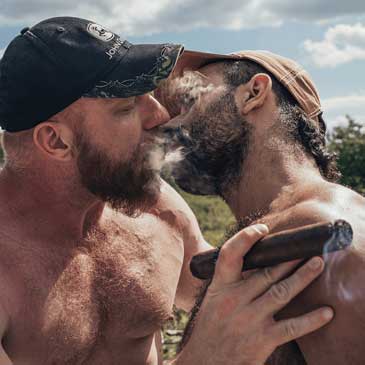
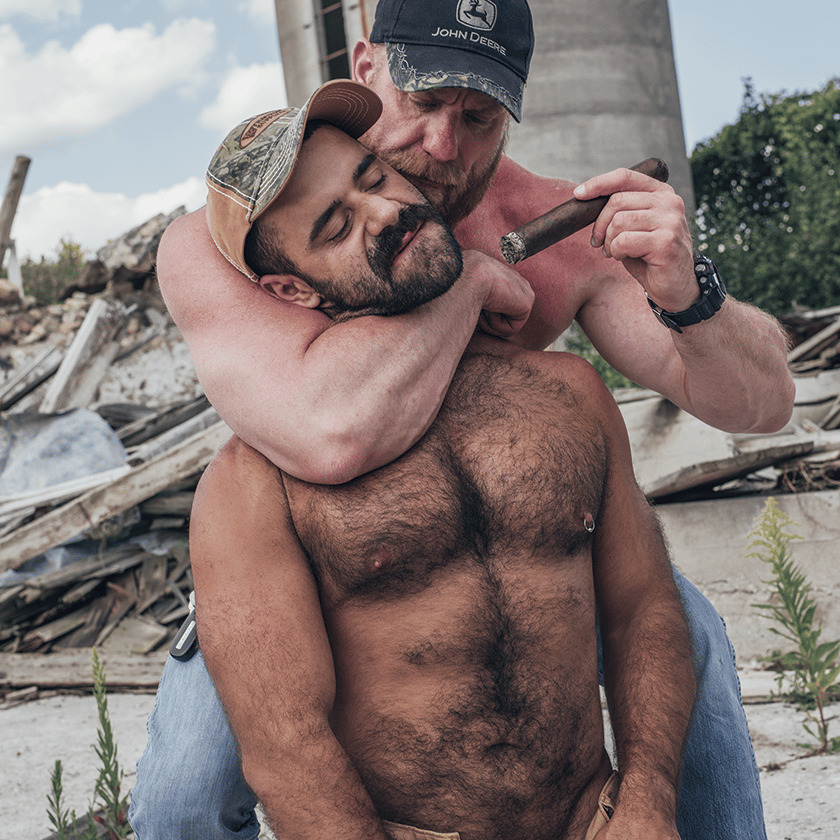
A man he knew from the bar, a man who never set foot in that bar without wearing full leathers with his boots shined to perfection, asked Bulldog how he was doing and was unconvinced with the shifty-eyed response of “okay.” They left the bar together and went to the man’s home. Bulldog sat on the floor between the man’s polished boots as the man smoked a good cigar and listened while Bulldog poured out his grief and his fear. Bulldog experienced a feeling that he and the man code-named “Atlantis.” It was the feeling of safety and protection, that nothing you could say and nothing you could do was wrong. Atlantis is the feeling that no matter what ordeals life serves up you are not facing them alone. Dominance and submission are what makes this intimacy possible between two men. “I am your Dad, you are my boy. What strength I have I lend to you. There is no burden that you bear alone.”
The outcome is not curative. Bulldog’s mother died and that was hell on Bulldog.
It was not a matter of “go in sad and come out happy.” The outcome was a deep bond of love between two men that endures to this day. To the man, Bulldog will always be “boy.” To Bulldog, the man will always be “Dad.”
II.
So is Bulldog a Dad or is Bulldog a boy?
The answer is, “Yes.”
A friend once gave him a leather wrist cuff. He knew from his reading that wearing it on the right wrist meant he was submissive and wearing it on the left wrist meant he was Dominant. Bulldog was shown photos from some leather event he had attended. Bulldog noticed that in some of the photos the cuff was on the left and in others it was on the right. The photos were all taken with the same device so it was not a matter of the images being reversed. Bulldog realized that over the course of the weekend he was moving the cuff from one wrist to the other completely unconsciously. Whether he is the man who steers or the man who paddles, what is important is that the canoe moves forward.
But forward into what? What is the destination?
This, for Bulldog, is the most important aspect of a Dad and a boy in relationship with each other. Such a relationship is about trust and passion and bonds of love. And other kinds of bonds, the kind with knots. The man in charge gets to be in charge. If he wants to beat his boy’s butt until his boy is broken and wailing then that is what is going to happen. That boy is given an opportunity to shine, to show his Dad just how much he can take, to mark out the depth of his love demarcated by his devotion and, crucially, by obedience. If you have been there, you know how it ends, with holding and tears of rapture and declarations of love. This is the rough-and-tumble play of boys for men. This makes love not the bog that a relationship can become but endless opportunities for adventure. When a Dad and his boy share a mutual bond of trust, respect, and love, the possibilities are limitless.
Ah, the part about trust. To be that vulnerable before another man, to show to that man a part of yourself that no one else in your life gets to see…to do that is to risk a great deal. To risk everything. When that trust is betrayed, it is shattering.
Bulldog contends that although submission is taken to indicate weakness just the opposite is true. Submission is only for the very strongest of us. Because Dominant men are just men. Like all men, they do things and say things that hurt people they love and care about. They go back on their word. They do not honor their commitments. When they are tired and hungry, they become small-minded and petty––as do we all. It is not these failings that determine character. A man who dismisses or minimizes or rationalizes his failings is a man who by all rights should not call himself a man. But a man who admits when he has failed, who owns that failure, and thinks long and hard
about what he will do to never, ever fail in that way again, that is a man worthy of respect by his fellow men.
But to that man’s boy, the failure hurts and hurts terribly either way. Being a boy is not
dependency. That way lies madness and misery. Again and again and again, a boy must find the strength to go on, a boy must find the courage not to seal his heart away to avoid the pain of betrayal but to put himself out there again and again and again. (Although maybe next time with a better man.)
And how does a boy go about finding a better man?
Bulldog was a frequent visitor of Sawmill, a clothing-optional all-male campground in Central Florida. He would go for a night, a weekend, or even stay weeks at a time. On
one of his visits, sitting by the pool drinking beer with friends, he noticed a man, tall and well-built, with the rugged face worn by those who have faced many of life’s battles head on, make his way along the periphery of the pool. He walked through the other men reclining on chaise lounges like he was striding across the deck of a battleship. He found an available chair, settled himself, rummaged in the bag he had brought with him, removed what he needed from the bag, and proceeded to do needlepoint. The man would lose himself in needlepoint, like a medieval monk illuminating some holy text. Regardless of what was going on around him, the man’s attention was fixed on his needlepoint.
Needlepoint!
What the hell kind of a man does needlepoint? In public yet? In front of other men?
In Bulldog’s estimation, it is a man who is completely and entirely comfortable with himself and who he is. His opinion of himself does not rely on the shallow estimations of men insecure in their own masculinity. Calmly, patiently, working the needle and thread with his fingers, he creates a small piece of perfection, a little masterpiece, the
work of his own hands. The uninitiated might look at the fruits of his labor and think, “That’s nice,” but anyone who knows needlepoint would likely be awed.
Men make. A man sweats out in the hot sun to grow a garden. A man bloodies his knuckles replacing the brakes on his motorcycle. A man gets splinters under his fingernails building a deck on the back of his house. A man combines water, flour, yeast, and salt, proofs and kneads and bakes, and sits down to a sumptuous feast of bread still warm from the oven slathered with butter. At the outset, all of these men knew nothing about how plants thrive, motorcycle maintenance, construction, or baking. Their initial efforts brought lamentable results. But they persevered. They thought through where things had gone wrong. They humbly sought out the wisdom of those who knew better than they did. They take their work seriously, apply themselves to it, and take pride in being damned good at it when they get there.
As with work, so too with love. They try, they fail, they learn from that failure, they try again. They learn when to speak and when to keep silent. They learn how to express their love not just with words (“…a little air between the lips” is how Shakespeare described words) but with actions. They willingly shoulder those things that are the foundation of love: duty and obligation, putting the needs of another person before your own. A man in love determines his true life’s work to be making his beloved happy.
In a bygone era, all this was definitionally what makes a man. But those days are gone. Now, crossing the bridge from being a child to becoming a man is optional rather than obligatory. A male can spend his life being unthinking, seeking only facile pleasure, doing crazy, stupid stuff, well into his forties or fifties or sixties and beyond. Bulldog once headed to IML, thinking that such a storied gathering must be a kind of
masculine Valhalla, a sacred realm of men. What he found, of course, is what he
describes as ‘a really fun whore hotel’, and had a great time whoring in that hotel.
The search for a Dad is often fruitless. And the adage that “if you meet the Buddha on the road, kill him” holds true here also, as many men who think of themselves as Daddies have not much to offer in terms of wisdom or strength to any boy.
But Bulldog believes they are out there and so he perseveres. He does not lose faith that there are men out there in the world who are not just Daddies, but men who have what it takes to be a father: humility, the calm aspect that comes from self-government, and the capacity to love deeply and passionately. They can be recognized by their instinct for kindness, the way they meet setbacks with good humor, their talent for finding delight in the mundane, and their complete comfort and ease in their own skins. For a man like that, Bulldog would challenge himself to stop acting the fool all the time, to exercise self-discipline in his conduct. Bulldog would always be on the lookout for opportunities to shine, to make his Dad proud of him, to spoil his Dad with small acts of service, anticipating the man’s needs before he himself becomes aware of them, and thereby make himself the one indispensable thing in his Dad’s life.
In the meantime, Bulldog has his work cut out for him. Bulldog knows that the world is full of boys who need a Dad.
‘…and Mahaleel begat Jared, and Jared begat Enoch, and Enoch begat Methusaleh, and Methusaleh begat Lamech…’ Fathers begat sons and those sons become fathers and begat sons of their own. Every man is some man’s son. Every man can become a father.
––––
In Bulldog’s fatherly toolbox is a tried and true device he offers to a boy—even to boys who do not think of themselves as being boys—who is facing a challenge that fills him with fear and feelings of inadequacy. Bulldog takes the boy in his arms, and when he feels the boy relax, he says softly in the boy’s ear, “Imagine you and I are walking through the forest. You are to my right. You do not know where we are going but you trust me to guide us. You hear the crunch of dry leaves under my boots. You see the sunlight coming through the canopy of the trees. We come to a clearing. In the middle of the clearing is an old cabin. Just behind me you climb the three wooden steps. I swing open the door that creaks on the hinges and we enter together. The cabin is quiet. On all four walls are large glass windows so we can see if anyone approaches, but of course, out here in the middle of the forest, no one does. In the light streaming in the southwest window, tiny flecks of golden dust are dancing. The cabin smells of leather and sawdust and woodsmoke. Here, with me in the cabin, you feel safe. So safe. So completely safe. There is no fear here, no sorrow. You feel the love I have for you. You know that there is nothing you could do that would cause me to ever take that love away. My love for you is the polestar in the nighttime sky. I tell you to look up. You do and you see up in the rafters a red balloon with a string dangling from the stem. I lift up my hand and the balloon floats down to me. I take the string and I tie it around your right wrist. We leave the cabin, down the three wooden steps, and with you on my right side, the balloon bobbing suspended on the string tied around your right wrist, we make our way back out of the forest.”
When the time comes for the boy to stand up to that challenge—the court appearance, the first round of chemo, the difficult conversation, the funeral, the meeting with his boss—Bulldog tells the boy to look at his wrist and he will see that the string is still tied there and the balloon is still bobbing from the string.
Bulldog says boys are almost always grateful.
Author: Drew Kramer for DRUMMER
Photo Credit: Bulldog