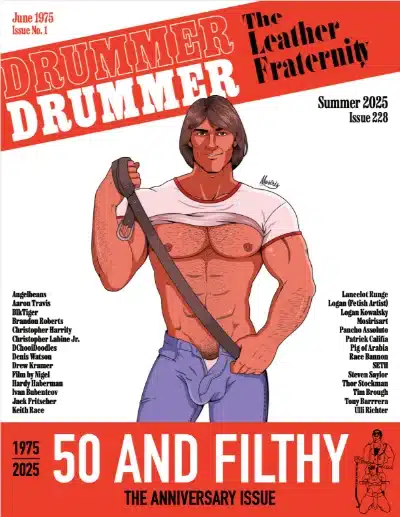

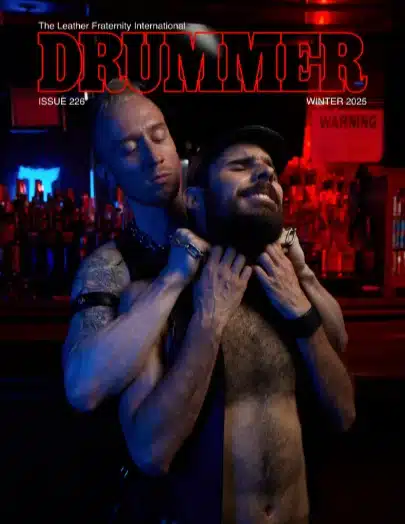
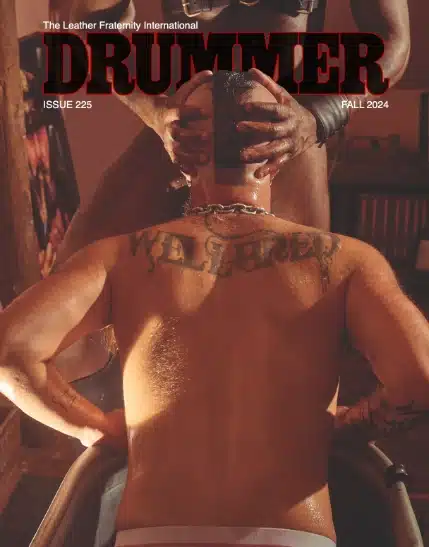
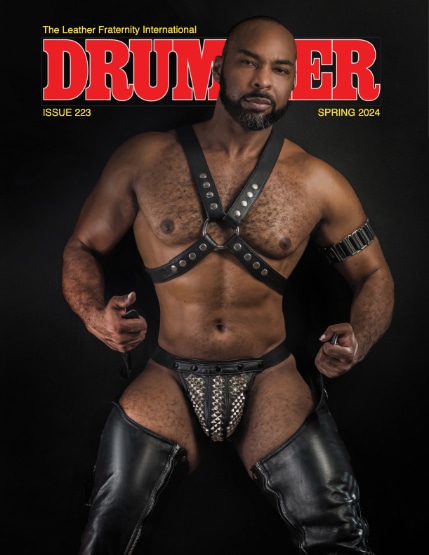

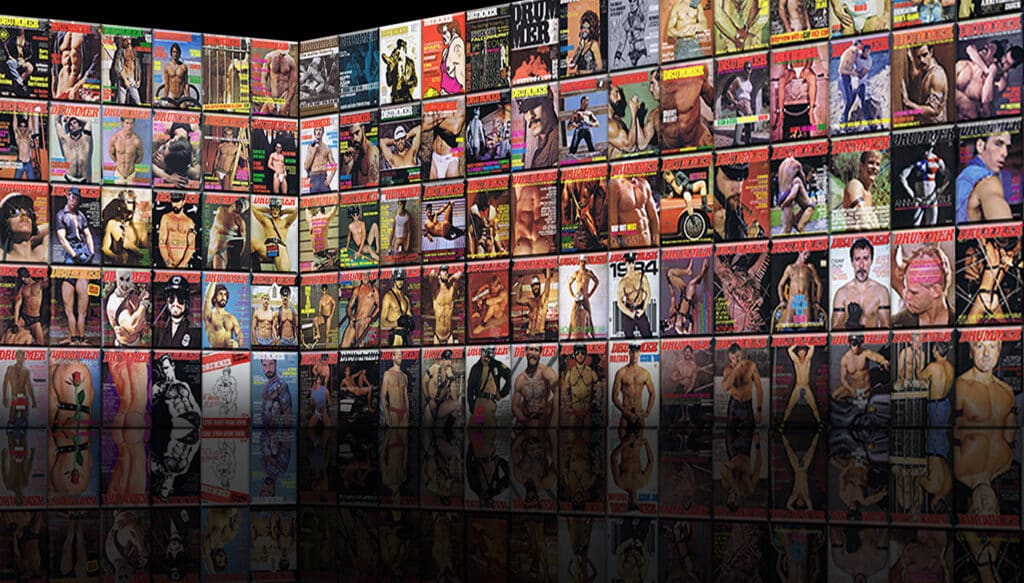




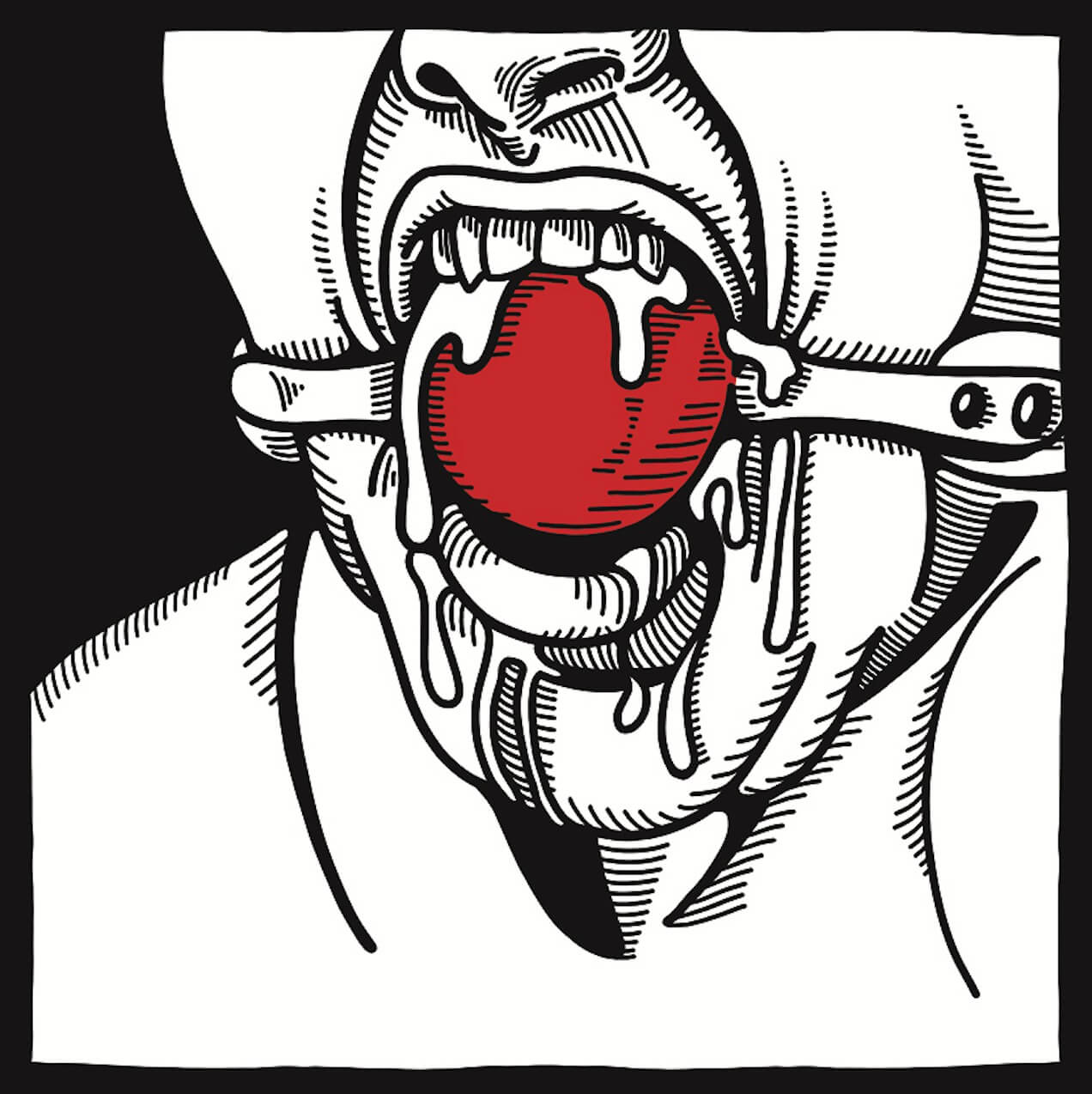


John Embry had moved Drummer to San Francisco after Los Angeles police raided one of his events, a slave auction, in 1976. The twisted and articulate Jack Fritscher was the editor, and Al Shapiro as art director shaped its iconic look. But it was like the North Star to me, a guiding light that had always existed. There wasn’t much to look at or read that told the truth about sadomasochism. I didn’t care about the gender or sexual orientation of the players in the images or stories I collected as long as they rang true. Story of O was on my book shelf next to Tom of Finland. Nine and a Half Weeks, A Spy in the Family, Harold’s Story, “Time Considered as a Helix of Semi-Precious Stones”—it was all hot. I felt very outnumbered and isolated. You can be proud of occupying a fringe subculture, but it can also be quite lonely. The only time leather or bondage occurred in a movie or on TV, it was in the context of a murder. I liked the people I topped (for the most part) and usually wanted to be able to recruit them for a sequel. I sure did not want them dead.
I had so many questions about this sexual practice that had leaped the barrier between J/O fantasies and real life. Luckily, there were a few people who shared their techniques and tricks with me. There was my ex-lover Cynthia Slater, Mike & Hank (a Master/slave couple) and Skip Aiken in the Society of Janus, Guy Baldwin, Steve McEachern at the Catacombs, Jim Kane and his slave Ike – even Sam Steward. I had some contact with David Stein and the other men who had founded GMSMA (Gay Male S/M Activists) in New York. I knew there was a previous generation, older leathermen who were usually quite formal and distant. But I rarely met one of them. They usually prejudged me as someone who was beneath their notice.
But not all of my questions could be answered by instructions on how to tie a square knot instead of a granny, the custom of beginning to fist with your left hand, or a firm ban on whipping somebody over their kidneys, behind their knees, or on their neck. (Duh.) I was what we now call AFAB (assigned female at birth), and I was busily organizing leather dykes via a group called Samois. I threw women-only parties. But I wasn’t sure I was much of a woman myself. I had told my parents when I was six years old that I was a boy (I wanted a train for Christmas). They thought that was funny as hell and demanded to know where my penis was. Imagine asking a six-year-old child such a rude question. Later, when I kept saying I was a boy or was going to turn into a boy as I got older, it wasn’t so funny, and I learned to keep my mouth shut to avoid humiliation or violence.
Some of you won’t want to read any further because of this revelation. I understand that. As queer people, we feel safer when we know we are communicating with guys who share our physiology and our sexual orientation. We assume that other gay or bisexual men (AMAB/assigned male at birth) will intuit our needs and mores. We tend to overlook how long it takes for any of us to come out and get enculturated as men who desire other men. If we are outsiders, “queer sorts of queers,” to use Dorothy Allison’s term, we are even more insular and self-protective. But give me a chance. I have studied Folsom Street, the Mineshaft, going to leather-oriented conferences, and gathered as much as I could about five decades of our collective history. I know what it means to be an outsider. Vanilla sex was always a little repulsive to me, partly because I could not fully occupy my own body. I’m kinky as hell, and I know my way around a dungeon.
So why was I that eager to get a copy of Preston’s story about a blossoming Master/slave relationship? I was firmly committed to being a top, but there was no one who shared my life story who could be a role model for me. I had seduced my first long-term submissive, but I was often unsure what to do with them. Where were the lines I should not cross? What sort of training did I want them to have, and how could I do this most effectively? How could I keep myself from burning out and combine tenderness and cruelty? What did it mean to love someone I wanted to string up and flog?
I had almost no contact with the straight S/M scene other than my friendships with a handful of professional dominatrixes and one straight dominant man. The dynamics between men and women made me hopelessly angry. I loved men’s bodies—their strength, muscles, deep voices, furry faces and bodies, that wonderful smell. But I didn’t want to be treated like a girl. I wanted equality. I wanted the comfort and challenge of homosexuality, man-to-man.
So Preston’s story about a sadomasochistic romance was as meaningful to me as any piece of classic literature. I studied it the way I had once studied scripture. Preston’s Mr. Benson had a plan. He was a passionate and exacting guy. He was masculine, smart, and mean as hell. I loved this story as much as everybody else in line who could not wait to get their mitts on a copy of Drummer. When I finally got the magazine, I tucked it into my jacket and took it home, where I studied every page until I had the damn thing memorized.
Drummer was part of a set of ethics and aesthetics that celebrated the things that made me catch my breath and start to sweat. Like Tom of Finland’s illustrations, the drawings by REX, and a handful of other artists and photographers Drummer published, those images made what I wanted much more attainable. Tom seemed to have come from a world where every man wanted to suck cock, get held down and stripped, suffer, and take it with secret joy. There was no shame. These were settings where it was safe to be strong, safe to put your hands on another man, safe to risk everything in pursuit of forbidden pleasures. Masculinity could be expressed by a pair of hard-worked nipples, the capacity to deep throat, an ass that could take the biggest cock, and shoulders that wore stripes as easily as drill sergeants wore their hash.
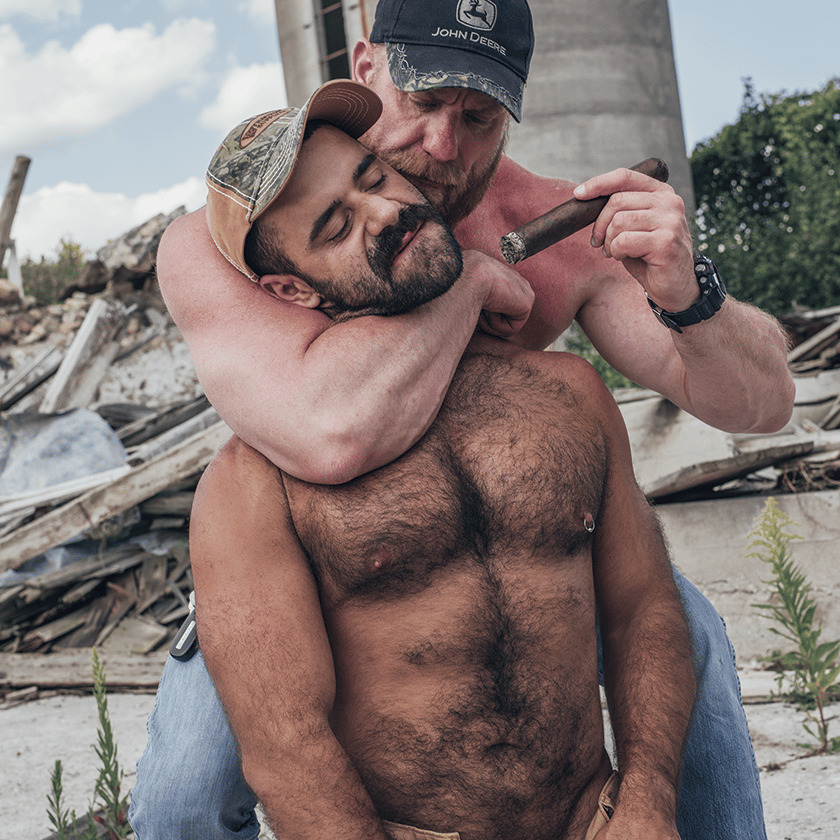
Drummer played with every masculine archetype. There were bodybuilders, men in military uniforms, athletes, cops, bikers, rednecks, dog trainers and their dog boys, priests and penitents. This was so damned subversive. These were not supposed to be icons of queer or kinky desire. These were the guys who yelled “Faggot!” out of their car windows as they drove past or braked to a halt and got out to beat us up. But within these pages, any man could be wantonly gay. Could get down on his knees by a glory hole or unzip his fly in a park shrouded by darkness. And it was worth it, utterly worth it, because it felt so damn good. The straight majority had ceased to exist. It was irrelevant, distant, and impotent. Because Drummer existed, I knew I could thrive and cruise as well, no matter how edgy things got.
The reality of the leather community was not perfect. During the ‘70s and ‘80s, a lot of gay men enjoyed dressing up in cowhide, but they were not necessarily kinky. Chaps, a studded belt, a leather vest, or high boots were just another way of looking butch. That was all very well and good, but if you wound up taking one of these “stand and model” dudes home with you, he was bound to be a little shocked when he understood that the leather was NOT coming off before sex. It WAS the sex.
We drank too much. We did too many drugs. We were not always kind to our tricks. Sometimes we were terrible friends, dodging social occasions if a hottie put his hands on our hips and whispered, “I live pretty close to this bar.” We were not always able to value ourselves or our community. But we were trying to figure it out. There was no internet. We had to face each other to gain self-knowledge, welts, piercings, reputations. We had to risk our holes as well as our hearts. And there was a price to pay. There was still anti-gay discrimination, hatred, gay-bashing, families who viewed us with distaste. Some of us lost jobs, custody of our kids, got evicted, and all the rest of that dreary shit. But we did not give up. We might be thrilled to kneel to the command of a respected Master, but we were not going to bow to homophobia or negative stereotypes of what it meant to be turned on by power-exchange sexuality. It seemed as if a whole generation of gay spirits had volunteered for the difficult task of liberating their people on earth. Gay men were sick of being called sissies or being branded as effeminate. They reclaimed their maleness with a vengeance.
We could do this because we had a culture. We were not stuck in jerk-off mode with nothing but fantasies to keep us company in our beds at night. (I don’t have anything against jerking off, of course. But to me, it is an adjunct to a whole range of erotic opportunities.) We had poets, storytellers, mirrors that reflected what we wanted to look like or say or do. And because of that, we were not alone or forced into a barbed wire shoebox of conformity. We had a chance. And most of us wanted that chance. We wanted to be free. Without Drummer, it would have taken much, much longer for us to have leather bars, organizations, play parties, march in the pride parades, and—a few decades later—stem the tide of an epidemic. Our activism was the result of our eroticism.
I’m not sure I would have transitioned, which for me meant taking testosterone and getting chest surgery, if I had no contact with other leathermen and specifically with Drummer itself. I grew up among men who were farmers or miners, truck drivers, mechanics, all of them deer hunters and fishermen. Most of them took it for granted that they had a right to be sexual predators, heavy drinkers, and child abusers. Despite their preference for male company, homophobia was rife and the punishment for gay behavior was draconian. It was a paradigm of manhood that had no niche for me. But leathermen were something else, even if the difference was sometimes elusive or slippery. The men I hung out with were wizards and shamans, alchemists and gentlemen. They were absolutely depraved but also quite wise. A whole row of us had season tickets to the symphony, which made for quite the shocking visual for the poor ushers. These guys read books, a few wrote them, they had graduate degrees and professions that challenged their minds. They did not suffer fools gladly. I am lucky to have had this cradle of gay father- and brotherhood.
Here are a few of the things that I learned from Drummer magazine and from my brothers in this wonderland of perversity:
Always carry the things you might need to do a basic scene. Don’t leave the house without lube, condoms, cordage or handcuffs, and a tool for beating somebody’s ass. If you have a fetish for shaving, ball gags, dildos, enemas, whatever—don’t leave it home in your night stand. Be prepared to take advantage of a heated invitation. Opportunity only knocks once.
Know your limits, whether that means the number of drinks you can handle, how many hits of poppers you can do without getting a splitting headache, the amount of sass you can tolerate without losing your temper, or whether you can handle the aftereffects of a particularly brutal scene. No matter how hard someone begs for an activity you don’t like or are not in the mood for, have the guts and integrity to say no.
You can never have too many trick towels. Keep a waterproof mattress cover on your bed. Learn to laugh when the smell of Crisco makes your dick get hard (because if you use that stuff on just one play partner, your sheets are going to smell like fried chicken for the rest of your life).
If you criticize somebody else’s play because you think they have gone too far, get prepared to be doing the same thing in six weeks’ time. Condemnation or repulsion is the flip side of fascination.
Monogamy is not necessary to sustain a relationship. In fact, expanding your sexual horizon to include other friends and lovers (or single-scene strangers who didn’t quite work out) teaches you to take better care of yourself and your partner(s), and keeps life from falling into monotony. There are ways to cope with jealousy. Go cruising at another bar, call a friend, put on some music and break out your favorite porn.
Even if you are a top, don’t be stupid. If you get a chance to switch, and it seems exciting, don’t let anybody else shame you into a straitjacket of consistency. The dynamics of fetish sex can present us with confusing but excellent opportunities to gain further self-knowledge and lose a load.
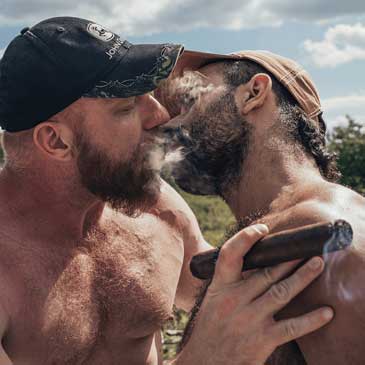
Men kiss each other. With tongue.
Facial hair and fur on the body get bonus points.
There is nothing wrong with rutting like a pig in a muddy sty full of other pigs. Switching off rational thought and tuning in to the full spectrum of physical sensations is amazing and edifying. But there is also another world, very close to this one, and the rituals of sadomasochism can open a portal into that ethereal and transcendent realm. The gods gave us pleasure because they wanted to compensate us for our mortality. We don’t get to live forever, but we do get to live with intensity. We can use empathy and calculated increments of torment to give ourselves wings and fly.
Without the right music, sex is mediocre.
Dressing up is foreplay, especially for tops. If you catch a glimpse of yourself in the mirror and wonder who that stud is, you are prepared to enter the arena of sensual combat.
There are few obedient slaves, only people who wish they could yield. If you order the most abject piece of property to do something they genuinely do not want to do, even if you are entitled by agreement to exercise that power, they will lie to you, hide what they have done, and secretly think you are stupid if you do not uncover their duplicity. This is why punishment is a necessary adjunct to sexual slavery.
A scene is not just the occasion for using your equipment. (Please, if you have any self-respect, do not say “toys.”) It is a venue or context for the creation of meaning. A collar may be just a length of hardware chain and a padlock. Until it signifies something important, it is lifeless. Perhaps the collar goes on to signal that the two of you are now operating under Dominant/submissive dynamics. When it comes off, it means the scene has ended and equality is restored. Maybe it means you are in love. Maybe it means ownership, protection, commitment. These things need to be said out loud. These values need to be mutually understood and taken to heart. A bottom who hates wearing a collar may tolerate one as a sort of bribe to gain a top’s attention, just as a masochist may begrudgingly follow orders so you will hurt them. Don’t tolerate that kind of doubletalk and manipulation.
Consent and negotiation are all well and good, but if these conversations become too involved, you will lose your head of steam, and play will be lackluster. Sometimes negotiation is a matter of facial expression or body posture. Sometimes consent is dropping your eyes in front of a hard stare. A crooked finger can change your life if you follow that beckoning and give up your inhibitions. Know yourself. Some of us can communicate this way; others can’t. And it’s not something you ever want to get wrong.
_____
I’m sure there could be a longer list. But I want to end with gratitude instead of recounting my vast wisdom and knowledge. I am so grateful to the men who put their names and faces on the line by producing Drummer. The models who let the world see them being vulnerable and vain, peacocks in all their glory. The writers, editors, and publishers who often worked on a shoestring budget to put together this tribute to the human imagination. The advertisers who risked their financial security on businesses that catered to a minority-within-a-minority market. The readers who kept it all going. The guys who advertised and put their bodies on the line to seek out sublime experiences.
In other words, my beloved community. I know these are terrible times for us. Many of us feel hopeless, hounded, exhausted, and discouraged. But I have known us to flourish under even worse conditions than the ones we currently endure. It has become more important than ever that we not take each other for granted. This may sound quite weird, coming from someone who likes to do play piercings and cane people till they bleed. But I believe in the healing power of connection. We do not have to be alone. And that is perhaps the greatest achievement of this extraordinary magazine. We know that now. We are legion.
Author: Patrick Califia